I went to Mihama Town for a preliminary inspection.

There is an English version in the second half.
当会の会員さんの案内で、美浜町~由良の下見に行ってきました。
まずは白崎海洋公園に行きましたが、台風の影響からか嵐のような風で車から降りるのを断念。
その後、会員さんがよく登る山に行きました。
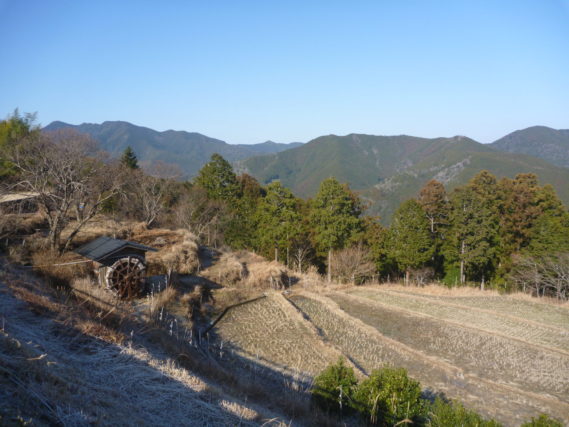
1時間ほどで頂上ですが、その眺めは紀伊水道を一望できる絶景でした。
下山後に三尾地区を回り、日御埼まで足を運びました。
三尾地区はカナダへの移民が盛んだった地域で、1888年に工野儀兵衛(くの ぎへい)が三尾地区で初めてカナダに渡ったところから始まります。
その儀兵衛が、バンクーバーのフレーザー河で鮭の大群が遡上する姿を見て「これだ!」と閃いたといいます。
「みんなカナダに来い、ここはサラン(鮭)が折り重なって泳いでいる!」
こうして村人は次々にカナダへと渡ったそうです。
男性たちは鮭の漁、女性は鮭の缶詰工場で働き、現地の信頼を得ていったそうです。
しかし、その「栄光」も、大東亜戦争で露と消えてしまうことになりました。
カナダであっても、日本人は捕虜として捕らえられ、1300隻あまりの船が処分されてしまったとのことです。
三尾地区はこの移民の歴史を後世に伝える活動として、英語で発信する「ジュニア語り部」の取り組みをしています。
一度聞いてみたいと思っています。
I went to Mihama Town – Yura for a preliminary inspection under the guidance of a member of our association.
First, we went to Shirasaki Marine Park, but gave up getting out of the car because of the stormy winds from the typhoon.
Then we went to a mountain that members often climb.
It took us about an hour to reach the top, but the view was spectacular, offering a panoramic view of the Kii Channel.
After descending the mountain, we went around the Mio area and visited Hinomisaki cape.
The Mio district was a region where immigrants to Canada flourished, starting with Gihei Kuno, the first immigrant to Canada from the Mio district, in 1888.
When Gihei saw a large school of salmon moving up the Fraser River in Vancouver, he thought, “This is it! ” He was inspired by the idea.
Come to Canada, where the sarang (salmon) are swimming in layers!
Thus, the villagers went to Canada one after another.
The men fished for salmon, the women worked in salmon canneries, and they gained the trust of the locals.
However, the “glory” vanished with the Greater East Asia War.
Even in Canada, Japanese were captured as prisoners of war, and some 1,300 ships were destroyed.
As an activity to pass on the history of this immigration to future generations, the Mio district is working on a “junior storyteller” initiative, which is transmitted in English.
I would like to hear about it once.