I have written about the same thing before, and I will write about it again.
I would like to state in advance so that there will be no misunderstanding. I have no intention of discriminating against women. I am sometimes called “discriminating” or “belittling” when I write such things, but I want to let you know in advance that I have no intention whatsoever to do so, no matter what anyone says.
◯Kii Minpo, May 17, 2012: Female vice principal at record high of 50
The Kii Minpo dated May 17 reported that the percentage of female vice principals at Tanabe private elementary and junior high schools in fiscal year 2022 reached 50.0%, a record high. The article concludes by saying that the government’s fifth gender equality plan aims for 25% of vice-principals and vice-principals and 20% of principals in 2013.
To put it bluntly, this is too cliché.
◯Equal Opportunity and Equal Results
What must not be mistaken here is that equal opportunity is now given to both men and women. This is called “equal opportunity”.
In contrast, “equality of results” is the idea that it is sufficient to simply match the number of men and women.
The current gender equality and the gender equality that is being called for today fall into the latter category.
Both men and women are given equal opportunities. Isn’t this true equality? Please click here to see why it is wrong to match headcounts only. The SDGs Are Destroying the World (6)
◯ “I really want to be a full-time housewife” about 30% of working women
As this shows, a good percentage of women want to become full-time housewives. The government, which ignores the feelings of women and is so eager to promote equality of results, is the one that is disrespecting women, isn’t it?
◯Japan used to be open
In the past, full-time housewives were entitled to benefits. However, under the banner of “Let women go out into society,” the government has stopped providing such benefits, and as a result, women now have to go out into society.
Until now, it has been the norm for women to do “housework and childcare” at home and for men to go out into society to work. I am planning to talk about this again at the history workshop, but let me tell you, men who go out and work in society are generally “temporary workers” who put all the money they earn into the house and receive “pocket money” from their wives.
When you put it this way, don’t you feel “sorry for men”? (Laughter)
In the past, men were only allowed to do very limited things, such as recording official documents.
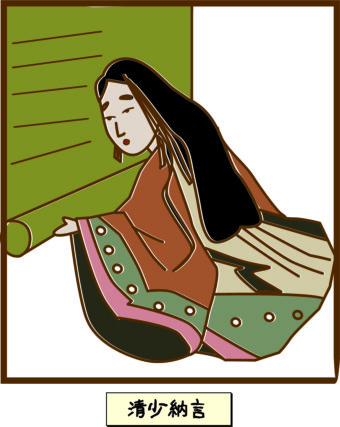
On the other hand, Izumishikibu, Murasaki Shikibu, and Sei Shonagon were active about 1,000 years ago. Japan is the only country in the world where people were allowed to read, write, and even write novels from such a long time ago. In the West, women novelists finally appeared about 700 years later than in Japan. It was only after the death of her husband that she appeared as a writer.
Japan allowed women more opportunities for learning and freedom of action than any other country in the world.
The SDGs that are now being called for around the world are “none of your business” from Japan’s point of view.
◯Housework and childcare are honorable jobs
Housework and childcare are honorable jobs. On the other hand, going out to work means taking on social responsibility.
You can’t afford to cut corners when you do this.
However, all human beings are equally given 24 hours a day. Time is limited. We have to cut corners somewhere.
So, where do we cut corners?
Housework and childcare.
I have heard that there are families that do not have time to cook meals, so they settle for prepared foods from the supermarket, or in the worst cases, they eat bento at convenience stores all the time.
As I have told you before, food is very important, not only in terms of nutrition and the dangers of additives, but also in terms of strengthening the family bond when everyone enjoys together the food that the wife has taken the time and effort to prepare.
Even if it is impossible to make everything by hand, at least one homemade dish is said to make a big difference to the family bond. Family bonding cannot be strengthened by convenience store bento.
The time and effort to make such a dish has been lost.
I digress. To be frank, if you really want to do housework and childcare, you cannot do it while working. It is impossible.
One of our clients told us, “I loved my job, but I couldn’t do housework and childcare because I had to work overtime all the time, so I just left it to my grandmother. (Please do not pry into the identity of the person who left this job.)
Basically, it is impossible to balance housework and work.
However, nowadays it is common for people to work together, so I think it is fine if you and your husband cooperate with each other. However, I hope you will keep in mind that there will still be distortions somewhere.
Those who say, “He went to the trouble of doing it, but the way he does it is not right,” need to have a proper discussion and decide what you want your husbands to do. Otherwise, it is the same as saying, “Don’t help me with housework and childcare”.
I know this may sound insistent, but I am not saying “women should not work”. I have no intention of denying women’s advancement in society, as there are some occupations and positions that require the attention to detail that only women can provide. If women want to work, I don’t mind if they do, since we have equal opportunities now. However, there are many women who want to be homemakers, and I would like to say that the distorted gender equality of today that lumps everyone together in a single category is wrong, as if ignoring this.
◯Nursery schools and nursing homes
It is said that nursery schools and nursing homes cannot be operated without financial support from the government.
As you all know, since women have started working, the demand for nursery schools has increased despite the declining birthrate, and the number of children on waiting lists has been increasing.
However, the more the number of nursery schools increases, the more pressure is being put on the government’s finances.
The same is true for nursing homes.
Simply saying, “The number of children on waiting lists has increased, so let’s increase the number of nursery schools” is a symptomatic treatment. It is the same as saying, “Let’s treat cavities because they have developed,” but if we do not prevent (solve the root of) the problem, cavities will develop again in different places. This will never solve the problem.
“Let’s use immigrants to cover the cost because the population is decreasing.” Or, “There are not enough interpreter guides, so let’s make it possible to guide people without a license.”
It is a very ad hoc and poor way of thinking.
What can we do to prevent this from happening? I think it is necessary to change the way of thinking (preventive measures).
◯Nuclear family and large family
In the past, there was a sense of community-based child-rearing, at least until our time. As evidence of this, we were scolded and patted on the head by neighborhood uncles. Also, in the family unit, grandfathers and grandmothers worked together with us to raise children.
Grandma was especially knowledgeable about child-rearing and other subjects, and her wisdom from the past was useful in raising our children.
Nowadays, these “wise women” have been placed in nursing homes for the elderly and the nuclear family has become the norm, and there is no one left to impart this wisdom to us.
As a result, more and more people have become child-rearing neurotics because they do not know how to know how to raise children. And so an industry of “child-rearing counselors” has emerged.
Isn’t this situation distorted? Of course, some people may have been saved by this, but in the end, isn’t this just a symptomatic treatment?
◯Learning from history
It may be impossible to do so suddenly, but I think what modern society needs is to go back to the old days of Japan.
Why don’t those who say that the way of thinking is old-fashioned try to learn from the history of Japan, the oldest country in the world? This is despite the fact that it is filled with the experience and wisdom accumulated by our predecessors through their hard work. Learning from history does not mean “thinking old”. Rather, it is a forward-looking, future-oriented way of thinking about what to do in the future while borrowing from the wisdom of our predecessors.
◯Everything is connected
If the number of nursing homes and nursery schools is reduced, there will be less pressure on the government’s finances. Fewer people will get sick, and the huge annual medical costs of 50 trillion yen will be reduced. As a result, consumption taxes and other taxes will no longer be necessary.
Food, the declining birthrate, the nursery school problem, and medical costs are all connected.
Because they are all connected, it will be difficult to change them, and it will be impossible to change them all at once. However, I believe that we are approaching an era in which it is necessary to first change the mindset of each and every one of us as citizens.
I believe that learning about history is a very good way to think about how Japan should be left to future generations.
Today, we begin with another story by Zenko Onagi.
The Heian culture was a time when female poets such as Murasaki Shikibu, Izumi Shikibu, and Sei Shonagon were active. This was a time when Japan enjoyed peace and stability, and women were able to shine.
Such an era and society in which women could shine could only be realized if the world was at peace. There were women who played an active role even in a war-torn world, but they were rather manly people. Instead, women can only shine in terms of culture and education if the society is stable.
The Pillow Book is one of Sei Shonagon’s most famous works. Many of you may remember having to recite “Spring is at dawn and the mountains are turning white…” The Pillow Book was written in the middle of the Heian period (794-1185), and was written by the author Sei Shonagon, who was a famous author in the Heian period. Many of you may have been taught that The Pillow Book is a very prestigious work of literature written by Sei Shonagon in the middle of the Heian period (794-1185). However, the Pillow Book is a book that you keep by your bedside before going to sleep and read it and laugh at it.
“Summer is the Night” is also said to have depicted a scene in which a group of people were playing outside when an evening shower came and they looked at each other and laughed when they all went under the eaves of the roof.
Or, when a man dressed up for a night crawl wearing a long crow’s-bonnet (60 to 70 cm long) sneaked into a house and made a big fuss by hitting his crow’s-bonnet on the duck-roof, causing a big commotion. He made such a loud noise that even the woman and her family, who were waiting for him with great excitement, knew about it, and they wondered what he was thinking. The story is said to read, “What in the world is this person thinking?”
So Kiyomaro discussed the matter with his sister Hiromushi, and they agreed that he should not lie, and so he honestly told the story in the presence of the emperor, Dokyo, and other officials.
Thus, Dokyo was forced out of his position.
Kiyomaro rose through the ranks to become involved in the construction of Heian-kyo.
According to Zenko Onagi, a person like Wake-no Kiyomaro always appears at each historical milestone. And the national character of Japan is preserved. These people like Wake-no Kiyomaro often suffer terrible things. However, thanks to the activities of such people, the character of Japan has been preserved to this day, and it is the only country in the world where the people are regarded as the great treasure and where the people can live in peace and prosperity.
It is said that Japan is now on the verge of collapse, but perhaps it is precisely because Japan is now on the verge of collapse that we need a modern-day Wake-no Kiyomaro.
In the 13th and 14th century West, war orphans were taken in by hospitals, churches, or slave traders. One 13th-century country record states, “Pagans, prostitutes, and orphans are not allowed in the city or its environs,” and there were even laws imposing fines for harboring orphans.
In other words, these people were to be excluded from society. This is why the West did not have a system like Japan’s even in the 13th century.
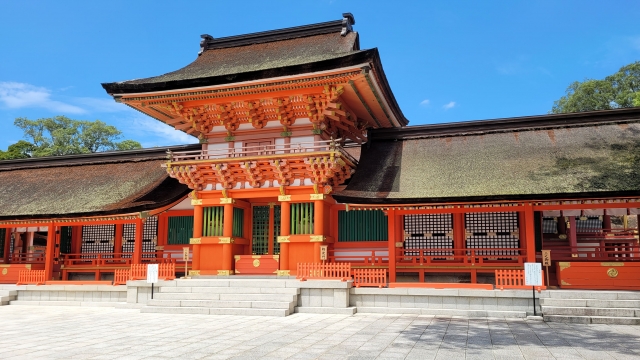
Now, Dokyo, who had been plotting to usurp the position of emperor, received an oracle from the god of Usa Hachiman Shrine in Oita and began saying, “I will be the next emperor”. For more information on this story, please click here. The Heian Capital and the Japanese Political System (1)
To confirm whether what Dokyo said was true or not, Emperor Shoutoku instructed Wake Hiromushi, Wake Kiyomaro’s sister, but unfortunately, Wake Hiromushi was ill at the time and not in a fit state to make the long journey. He asked his younger brother Kiyomaro to go in his place.
Kiyomaro was 37 years old at the time.
Hearing this story, Dokyo immediately went to Kiyomaro and offered to give him the rank of minister. This was also a threat: “If you defy me, you and your sister will die”.
Recently, the policy of “civilian control” has been adopted, in which civilian officials control politics, because it is not a good idea for military officers to be in power.
It is mainly the leftists and those in postwar education who now claim that politics by civilian officials is important, but why don’t they mention Wake-no Kiyomaro, the hero of the civilian government?
A quick check of Amazon.com reveals that the only book written about Wake-no Kiyomaro since 2000 A.D. is one by Isao Hisai.
There are no other books on Kiyomaro Wake at all.
If one is going to argue for civilian control, it would be a good idea to do more research on Wake no Kiyomaro.
Wake-no Kiyomaro was born in 733 AD. Wake-no-Kiyomaro had an older sister, Wake-no-Hiromushi, who was three years older than him. This elder sister was also a very talented person, and went up from Okayama to the capital of Nara, where she became a courtesan, Uneme. Later, at the age of 15 (today’s 14), she married Kutsuragi no Henushi. He was a very kind man, and at that time, he took care of children who had lost their parents due to war or famine, and gave them the family name of Katsuragi when they came of age.
This is called the “foster parent system” in modern terminology.
This foster parent system was started in 740. In fact, this was the first foster parent system in the world.
Previously, we discussed how Wake-no Kiyomaro fought against Dokyo and prevented him from ascending to the Emperor’s throne. In this issue, we will discuss how Wake-no Kiyomaro was able to have such a strong will.
There are many people in Japan who are called heroes, great men and women.
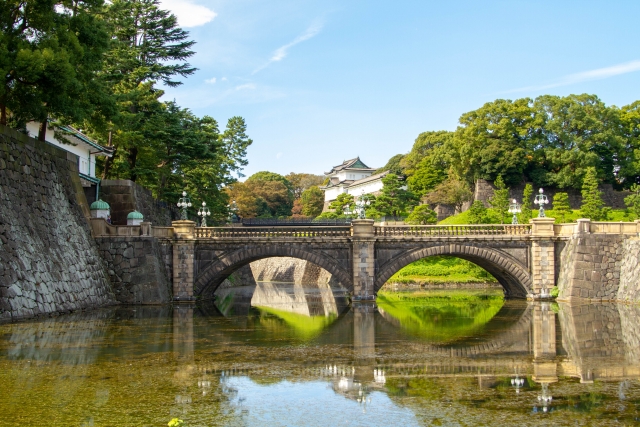
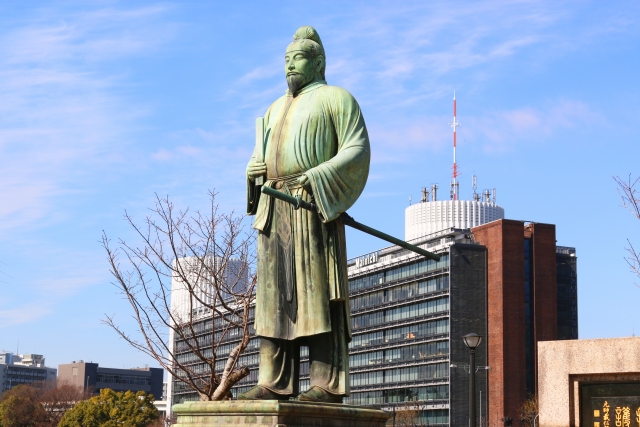
Among them, only two have statues standing around the Imperial Palace: one from a civilian official and one from a military commander.
The military commander is Masashige Kusunoki, and the civil official is Wake-no Kiyomaro.
Wake-no Kiyomaro was completely erased from history after the World War II. However, he was so well known to everyone before and during the war, regardless of their educational background or place of residence.
Despite the fact that he was such a famous figure, few people now know of him, even those who graduated from the University of Tokyo.
His great achievements were later recognized in Kaei 4 (1851), when Emperor Meiji’s father, Emperor Komei, bestowed upon him the rank of “Shinkai Shoichii” and the divine title of “Go’o Daimyojin” (God of the King).
The “Shinkai Shoichii” is a rank as a deity. This is the “Shoichi” rank, which is just below the rank of Amaterasu and other deities. This is the highest honor for a civil official in Japan.
There is a description of “authority” in the sentence.
The Japanese word “authority (Ken-i)” is different from the Western word “authority,” but I have no choice but to use the word “authority” because I can only find the word “authority” in English.
Please understand this in advance.
I would appreciate it if you could provide me with the best alternative word to “authority”.
The wife who was killed was the most beautiful woman. Now that beautiful woman is gone. This would cause trouble at night.
Emperor Wuzong asked his subordinates. “Is there any beautiful woman who can replace your wife? I’m having trouble at night.” He thought he was being asked “Who are the beauties?” His subordinate answered, “None other than His Majesty the Emperor’s mother.” Then Wuzong replied “Then take my mother into the empress’s residence.”
Upon hearing this, Wuzong’s mother was surprised.
In the end, his mother refused.
And what happened to this mother? You have probably guessed by now.
Wuzong even killed his own mother.
This story is by no means a story from another country. If we look at it from a broader perspective, Japan is being treated by the United States just like Wuzong’s mother. The president of the United States, who killed hundreds of thousands of civilians in the atomic bombings of Hiroshima and Nagasaki and the air raids on Tokyo, has not been brought to justice for genocide.
That is what the highest authority of a nation is.
He is not held accountable by anyone. If power and responsibility should be one and the same, but they are not held accountable, in other words, this is the “supreme irresponsible person of the nation”.
If that happens, it is obvious what will happen to the country, isn’t it?
How can we avoid inviting such a situation?
The highest authorities of a nation must be held accountable and aware of their responsibilities.
The answer is that there must be another supreme national authority above the supreme national authority.
If the nation and its people are made “great treasures” by the nation’s highest authority, then it becomes their role to serve the people, the land, and the nation.
This will change the way those in power think.
This is the ancient structure of Japan, and we can see the strength of Wake-no-Kiyomaro’s feeling in the fact that this structure must be protected at all costs.
This is an idea that could not have been born without studying the history of Japan. This is what our predecessors learned through the Chronicles of Japan.
Zenko Onagi has written a book in which he explains the Chronicles of Japan. I have read the book, and it is written in a very easy-to-understand and interesting way, rather than in a small and difficult way. I recommend you to read it.