大化の改新と国造り⑤

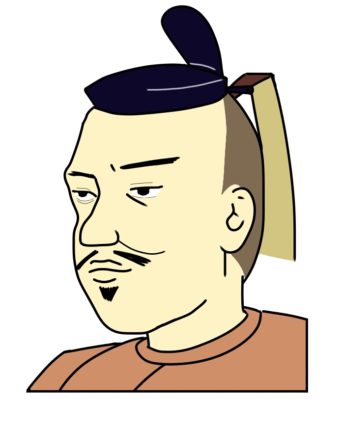
天武天皇

前回の記事はこちら
大化の改新と国造り①
大化の改新と国造り②
大化の改新と国造り③
大化の改新と国造り④

その白村江の戦いで亡くなった方は1万人。
彼らは全国の豪族の子息でした。

そうすると、遺族からは「天皇が国民を大御宝として大切にされているとこは分かる。百済を救うために援軍を出すのも分かる。分かるからこそ、息子を兵に出した。しかし、もう息子は戻って来ない。死んだ息子を返してもらいたい。息子を死なせることの原因となった皇室を許す訳にはいかない」という感情が沸き起こってきました。

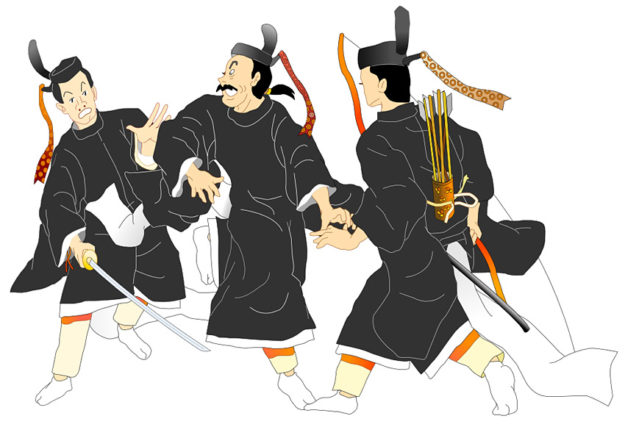
これを何とかしなければいけないということで、天智天皇(中大兄皇子)が崩御されたあと、天武天皇が天智天皇を許せないとい言っている豪族を集めて、天智天皇派を軍事力をもって攻め滅ぼすという行動に出ます。

そうすると、「アンチ天智天皇派」は全員、天武天皇の味方になります。

もともと天智天皇派だった人たちは天皇を中心とした部下という形を取っていたので、天皇に対する尊敬の気持ちを持っています。
その心理をうまく突いたわけです。

これで、天智天皇派と天武天皇派が合体するわけです。

しかし、最終的に権力が権力のために武力を用いるというようなことは、これっきりにしなければいけないという反省から、権力のために武力が用いられることがないように、天皇と権力を切り離そうということになりました。

天皇は国家の最高権威であって、一切政治権力は振るわない。
政治権力はその下の太政官がすべて責任を持っておこなう。
その太政官の政治において、武力を用いる必要がないように、教育と教養を日本の文化にしていこうということが、第41代持統天皇のお仕事となりました。

これによって日本の形が確定しました。

歴史を学ぶ上で、このことが非常に重要です。
「大化の改新は何年に行われたのか?」ということよりも、もっと重要なことであり、学ぶべきことなのです。

The Taika Reforms and Nation Building ⑤

Click here for previous article
Taika Reform and Nation Building (1)
Taika Reform and State Building (2)
Taika Reform and State Building (3)
Taika Reform and State Building (4)

The number of those who died in that battle at Hakusukinoe was 10,000.
They were the sons of powerful families throughout the country.

Then, the bereaved families would say, “We know that the emperor cherished the people as his great treasure. I also understand that he sends out reinforcements to save Baekchon. That is why I sent my son to the army. However, my son is not coming back. I want my dead son back. I cannot allow the emperor to be the cause of my son’s death.” This emotion has been aroused.

Emperor Tenmu decided that something had to be done about this, so after Emperor Tenchi (Emperor Nakano-oeno-oji) died, Emperor Tenmu gathered all the powerful clans who said they could not forgive Emperor Tenchi, and took action to attack and destroy Emperor Tenchi’s faction with military force.

In this way, all of the “anti-Emperor Tenchi faction” would become allies of Emperor Temmu.

The people who were originally Emperor Tenchi’s followers had a sense of respect for the emperor because they were his subordinates under him.
This was a good way of tapping into that mindset.

This is how the Emperor Tenchi’s faction and the Emperor Temmu’s faction merged.

However, in the end, they decided to separate the emperor from the power, so that the power would not be used for the sake of power.

The emperor is the supreme authority of the state and does not wield any political power.
The Grand Council of State under the Emperor was responsible for all political power.
The 41st Emperor Jito‘s task was to make education and culture the culture of Japan so that the Grand Council of State would not have to use military force in its politics.

This established the shape of Japan.

This is very important for the study of history.
“In what year did the Taika Reform take place?” This is more important and should be learned than the fact like that.
語り部団体との間で懸念される問題

現在、熊野古道だけでもかなりの数の語り部団体があります。
そのほとんどは、世界遺産登録直後だと思います。

「語り部団体」とは言っても、その活動の実態はガイド団体とほぼ変わりはないでしょう。
語り部団体のおそらくほとんどは、熊野古道について知ってもらいたいという純粋な気持ちから結成されたボランティア団体から発展したものだと思います。

そんな中で、当会は最後発の団体として結成しました。

もともとは、語り部団体にいた人物が外国語で案内する団体を立ち上げ、メンバーを集め、その延長線上に当会があります。

一番苦労したのが料金設定です。

他の語り部団体さんがどのような決め方をしているのかは分かりませんが、NPO法人Mi-Kumanoから引き継いだ時の料金計算方法は、まったくありませんでした。

少しでもトリッキーなコースの依頼や問い合わせがあると、計算ができなかったのです。
公式なんてなかったので当たり前です。
では、どんな決め方をしていたのかというと、「あのコースが◯◯円だから、このコースはこれくらいかな?」という感じでした。

そこで、だれが計算しても料金が出せる公式を作ることが急務だと感じました。
現在は改良に改良を重ね、ようやく通訳案内士の現在のレートを考慮した上で、ある程度納得のいく料金設定と計算方法が確立されつつあります。
それでも、新しいケースが出てきたり、システム的に不備があったりするので、まだまだ改良の余地があります。

そこで問題として浮かび上がって来たのが語り部団体の料金設定でした。

端的に言うと、コースにもよりますが、通訳案内士のレートと開きがありすぎたのです。

単純に、きちんと「棲み分け」ができているのであれば何ら問題はなかったかもしれません。
しかし、今新たな問題が頭をもたげてきています。

英語を話せる人が、日本語で案内している語り部団体に所属をし始めたからです。

それだけならまだ問題はありません。
どこに所属しようとそれは自由です。

問題はその次です。

たまに、語り部団体に英語で案内ができないかという依頼が入るようです。

そこで、日本語と同じ料金で案内をすることがあるようです。
現に、三重の語り部団体では、日本語も英語も同じ料金設定です。

これが問題なのです。

もしこのようなことが和歌山で定着していけば、間違いなく市場が荒れます。
私は長年、ガソリンスタンド業界にいましたが、安売り店舗が参入を始めてから一気に燃料価格が下落し、一時はガソリンで80円台にまで落ち込みました。
お客様からは「今までたいがい儲けとったんやなぁ」とか「値段下げることできたんやないか」など心無いことも言われました。

その後、旧白浜町内にあった9軒のガソリンスタンドのうち、3軒が閉店、私がいたスタンドは他の安売り業者に売却されました。
約半数が閉店、または事業譲渡に追い込まれたのです。
現在はもっと少ないです。

同じようなことが今、通訳案内士の業界でも起ころうとしています。

当会は日本語でも案内はします。
しかし、料金設定は「先輩団体」より高めの設定です。

これは、後発が単価を下げて参入すれば市場が荒れるからです。
ガソリンスタンドでいた時の苦い経験があるからです。

単価を下げて客を取るという行為は頭の良くない人がすることです。

だからといって、うちと金額を合わせろとは言いません。
もちろん価格設定も自由です。
しかし、当会が日本語で案内することが最後発であるのと同様、日本語で案内していた団体が英語で案内することは「後発」のはずです。
その配慮はしていただいてもいいのではないでしょうか。
あるいは、そういった意識自体がないのかもしれません。

このままいけば、間違いなく熊野での市場が荒れます。
うちも料金の見直しを余儀なくされ、ガイドが相応のガイド料をもらえないとなると、ガイドの魅力がなくなり、入会する人も間違いなく減ります。

現に、熊野のみならず全国の多くの語り部団体が現在抱えている、後継者不足の問題の一つの原因は、間違いなく安いガイド料だからです。

これは何も、語り部団体に限ったことではありません。

今、農家さんが減っている原因は何だと思いますか?
収入が割に合わないからです。
そうですよね?
「米なんか作るより、買うほうが安い」という言葉を、私は幾度となく米農家さんから聞いてきました。
「わしの代で終わり」という梅農家さんも多くいらっしゃいます。

息子さんが跡継ぎ候補としているにも関わらず、その息子さんは別の「お固い仕事」をしています。
そのほうが収入もよく、将来安定しているからです。

語り部の世界でも同じです。

せっかく素晴らしい知識と経験をお持ちである語り部さんにも関わらず、「安すぎないか?」という質問に対して「僕はみんなに喜んでもらえればそれでいい」とおっしゃっている方を結構見てきました。

それは「今の自分だけ良ければそれでいい」ということであり、そこには、将来語り部を存続させていこうという意図がまったく感じられない無責任な発言です。
自分は定年退職で退職金ももらい、小遣い稼ぎ程度でいいかもしれません。
でも、普通に30代、40代、50代の働いている人から見れば、ガイド料をたくさんもらえるほうがいいに決まっていますよね?

どこの団体に所属するのかはもちろん自由ですが、日本語の語り部団体に所属されている方で、外国語で案内できる方にお願いです。

どうか自分を安く売らないでください。

みなさんのやっていることは、だれでもできる仕事ではないんですよ。
もし、所属されている団体で日本語と同じ料金で行ってくれと言われたなら、はっきりと「これぐらいは欲しい」と訴えてください。

その行動が通訳案内士の市場を守り、将来に渡って後継者問題を回避できることに繋がるからです。

当会は幸い、ガイドの高齢化による後継者問題はまったくありません。
毎年40~50代の人が入会してくれるからです。
他の通訳案内士団体も、新型コロナ問題はさておき、おそらく同じでしょう。
現在語り部団体が抱えているそんな問題に、うちは巻き込まれたくはありません。

そして、当会も決して儲かってはいないということも付け加えておきます。
料金の下落はそのまま、当会の解散にも繋がりかねません。
そうなれば、あたたはどうやってガイドの仕事をもらいますか?
他の外国語のガイド団体に所属しますか?
そこもうちと同じような状況から料金を下げている可能性もありますよ。
与える影響は当会に対してだけではありませんよ。

そのあたりも考慮に入れていただき、市場が決して荒れることのないよう、ご協力よろしくお願いいたします。

大化の改新と国造り④

前回の記事はこちら
大化の改新と国造り①
大化の改新と国造り②
大化の改新と国造り③

日本は救援軍を送り、3年間戦いました。
どこに行っても日本軍は勝利の連続でした。
ところが、最終的に白村江(はくすきのえ)で大敗を喫することになります。

そもそも、この戦は新羅と百済の間で行われていたものです。
しかし、気がついてみれば、日本と唐が戦っていたのです。
攻めて行っても、百済の兵隊も新羅の兵隊すぐに逃げていなくなるのです。
それどころか、これらの兵隊は補給部隊などを襲って隅っこのほうで悪さを働いていたのです。

・・・なんというチンケな国民性(笑)

これは最近の朝鮮戦争と同じ構図です。
元々韓国と北朝鮮の戦いだったにも関わらず、気づいてみればアメリカとチャイナの人民解放軍との戦いになっていたようなものです。
これではバカバカしいということで、結局アメリカが38度線まで兵力を引いて休戦協定を結んだことで落ち着きました。

この時、韓国は休戦協定には入っていません。

事の無益さに気づいた日本は休戦をもちかけ兵を引き上げることを約束し、軍を白村江に終結させ、武装解除をします。
そこに火矢を撃たれ、片っ端から船を燃やされて海に沈められました。

The Taika Reforms and Nation Building④

Click here for previous article
Taika Reform and Nation Building ①
Taika Reform and State Building ②
Taika Reform and Nation Building ③

Japan sent a relief force and fought for three years.
Wherever they went, the Japanese army had a series of victories.
However, they eventually suffered a crushing defeat at Hakusukinoe.

To begin with, this battle was fought between Silla and Baekje.
However, it turned out to be a battle between Japan and the Tang Dynasty.
Even though they attacked, Baekje’s and Silla’s soldiers quickly fled and disappeared.
On the contrary, these soldiers attacked the supply troops and did mischief in the corner.

…What a dickish national character (laughs).

This is the same composition as the recent Korean War.
Although it was originally a battle between South Korea and North Korea, it has turned out to be a battle between the U.S. and the People’s Liberation Army of China.
This was ridiculous, and in the end, the US pulled its troops to the 38th parallel and an armistice was signed, and things settled down.

At this time, Korea was not included in the armistice agreement.

Realizing the futility of the situation, Japan proposed an armistice and promised to withdraw its troops, bringing its army to an end at Hakusukinoe and disarming it.
There, they were shot with fire arrows, burned their ships from one side to the other, and drowned in the sea.


大化の改新と国造り③

前回の記事はこちら
大化の改新と国造り①
大化の改新と国造り②

舒明天皇は、大和の国というのは一般の民衆こそ宝物であり、一般の民衆が豊かに安全に安心して暮らすことができる国だということを歌に託しました。
決して、一部の豪族が贅沢をする国ではないと言ったのです。

その舒明天皇を父に持つ中大兄皇子が立ち上がった・・・ということなのです。

そして舒明天皇がお亡くなりになられたあとを受け継いだ斉明天皇(舒明天皇の皇后)の目の前で、蘇我入鹿の首をはねました。

そしてすぐさま、民衆こそが公民(おおみたから)だと宣言されました。

そして、皇族で政治のすべてを一手に取り仕切り、豪族が介入することができない政治を始めます。

ところが、そこで朝鮮半島で有事が起こりました。

新羅が唐と組んで百済を滅ぼしたのです。

日本は当時、百済から朝貢を受けていた関係から、百済救済のための軍を起こすことになります。

-続く-

The Taika Reforms and Nation Building③

Click here for previous article
Taika Reform and Nation Building ①
Taika Reform and State Building ②

Emperor Jomei wrote a song in which he expressed his belief that the country of Yamato is a land where the common people are the treasures and where the common people can live in affluence, safety, and security.
He said that the country is not a place where a few powerful families can live in luxury.

Emperor Seimei’s father, Prince Nakano-oeno-oji, stood up for the country.

He beheaded Soga Iruka in front of Emperor Saimei (the Empress of Emperor Jomei), who succeeded Emperor Jomei after his death.

He immediately declared that the people were the sovereigns.

He began a political system in which the imperial family was in sole control of all political affairs and the powerful clans were not allowed to intervene.

However, an emergency occurred on the Korean peninsula.

Silla, in alliance with the Tang Dynasty, destroyed Baekje.

Since Japan was receiving tribute from Baekje at the time, it decided to launch an army to save Baekje.

-continued-

ビジネスマッチングに行ってきました

田辺市、和歌山市と2日間に渡り、ビジネスマッチングに行ってきました。
令和3年度 ビジネスマッチング
今回は参加人数が少なかったみたいですが、特に和歌山市でのビジネスマッチングは皆さん積極的にお話を聞きにきてくださいました。
持ち時間が各10分だったので、なかなか当会について詳細まで説明することができなかったのが心残りです。

この中から、当会に入会してくれる方がいればいいのですが。

今回私は初めて参加しました。
自然な流れで、自分の言葉でお話をするほうが言いたいことが伝わるだろうと思い、あえてパワーポイントは使用しませんでした。
パワーポイントを使うと、みんなスクリーンだけを見てしまうので、それが嫌でもありました。
また、2時間の講演をするなら必要ですが、持ち時間が15分だったのでパワーポイントは必要ないとも思いました。
作ってる時間がもったいないです(笑)

どんな内容の話をするかは決めてはいましたので、話の趣旨はズレてはいませんでしたが、田辺と和歌山で少し内容も変えました。
それぞれの地域に合わせてお話をしたつもりです。
どこを切っても同じの金太郎飴のような内容ではつまらないですからね。
来年、もしまたこのような機会があれば、もう少し内容を面白くしていきたいです。

当会は主に団体の紹介で終わってしまいましたが、すでにガイドとして活躍されている方の体験談を聞くことができたのは良かったと思います。
これだけでも聞きに来る価値はあると思いますよ。
人それぞれの失敗談は、本当に勉強になります。

大化の改新と国造り②

前回の記事はこちら
大化の改新と国造り①

仏像の値段というものは、あってないようなものです。
これで蘇我氏が大儲けをしました。
蘇我入鹿が生まれた当時、蘇我氏は絶大な力を持っていました。
たとえば、都で蘇我氏が乗っている牛車と、皇族の牛車がすれ違う時、皇族の牛車が道を譲るほどでした。

蘇我入鹿は自分のことを「帝(みかど)」と呼ばせ、自分の墓を「陵(みささぎ)」と呼ばせました。
「帝」とは天皇を指し、「陵」は天皇の墓を指します。

しかし、それに対して刃向かえる者がいませんでした。

その中で、舒明天皇が一首の歌と詠みます。
これは万葉集の巻一の第二番にある歌です。
ここで舒明天皇は「うまし国ぞ大和の国は」と歌を詠みました。
ここでいう「うまし」とは、大和の国は風光明媚で美しい国ですよと訳す人が多いのですが、この「うまし」は、原文では「怜」とういう字を書いています。
この字を元に先程の歌を解釈すると「神々の前で傅く(かしずく)心で、人々が感動をして生きることができる国ですよ、大和の国は」という意味になります。

人々が感動して生きることができるということは、人々の生活が豊かでなければなりません。
貧乏で食うや食わずの生活をしていて、目の前にある食べ物を奪い合って生きなければならないような状態では、感動して生きることができません。

感動をするためには、どこかで生活のゆとりがなければならないのです。

そのゆとりというのは、神々の前で傅く心で人々が真っ直ぐに生き、お互いに感動することができる、そういう国が大和の国であったわけです。

この舒明天皇、実は天智天皇と天武天皇のお父さんにあたるお方です。

-続く-

The Taika Reforms and Nation Building ②

Click here for previous article
Taika Reform and Nation Building ①

The price of a Buddhist statue is something that is or is not true.
The Soga clan made a lot of money from this.
At the time of Soga Iruka’s birth, the Soga clan was immensely powerful.
For example, when the ox carts of the Soga clan and those of the imperial family passed each other in the capital, the ox carts of the imperial family would give way.

Soga Iruka had himself called “Mikado” (emperor) “and had his tomb called “Misasagi” (mausoleum).
“Mikado” refers to the emperor, and “Misasagi” refers to his tomb.

However, there was no one who could stand against it.

Emperor Jomei composed a poem.
This is the second poem in the first volume of Manyoshu.
Here, Emperor Seimei composed a poem, “Umashi no kuni zo Yamato no kuni ha” (The Land of Yamato is the Land of Umashi).
Many people translate the word “umashi” here as “Yamato no kuni is a scenic and beautiful country,” but the word “umashi” is written with the character “怜” in the original text.
Based on this character, the interpretation of the aforementioned poem is “The country of Yamato is a land where people can live with a heart that is moved by the gods”.

For people to be able to live with excitement, their lives must be affluent.
If people are living in poverty and have to live without food, fighting for the food that is in front of them, they will not be able to live with emotion.

In order to be moved, there has to be a certain amount of relaxation in life somewhere.

That spaciousness was the country of Yamato, where people could live uprightly and be moved by each other with a heart of cherishing in the presence of the gods.

This Emperor Jomei was actually the father of Emperor Tenchi and Emperor Temmu.

-continued-

大化の改新と国造り①

There is an English version in the second half.

今回も、小名木善行さんのお話からです。

大化の改新とは、中大兄皇子と藤原鎌足が公地公民制を始めたことにより、一般の民衆は天皇の大御宝(おおみたから)であるということが文書化された出来事を言います。

今回は、学校で習ったようなことをなぞるのではなく、違った角度からお話をします。
時代は少し遡って聖徳太子の時代になります。
ここからどうやって大化の改新が起こったのかということについて触れたいと思います。

聖徳太子は非常に慕われていました。
彼が亡くなった時、そこらへんのおっちゃん・おばちゃんたちでさえ声を上げて泣いたということが日本書紀に記されています。

あまりにも聖徳太子が残した功績が大きかったため、次の世継ぎを誰にしようかということが非常に大きな問題になりました。

聖徳太子のような、みんなに慕われるような立派な方が次の世継ぎになれば、我が国は「皇室の知らす国」というこが固定されることになります。
そうなると、それを面白くないと思う人たちが、まだこの時代にはいました。

お金、武力、権力を備えた人たちです。

聖徳太子が亡くなってから、なぜか次々と皇室では世継ぎの方々が亡くなられ、ついに世継ぎはいなくなってしまいました。

そこで、古い時代の継体天皇にまで遡って皇位継承可能な人物を探し、やっとの思い出次の天皇を決めました。
こうして、天皇に選ばれたお方は、自分を選んでくれた人たちを大事にしたいという思いが湧きます。
そうすると段々、政治権力を持った人の力が強くなってきます。

聖徳太子は十七条憲法の中で「篤く三法を敬え。三法とは仏と法と僧なり」と、仏教の信仰を大切にしていたこともあり、仏教建築と仏像の彫刻において力を発揮していた豪族の蘇我氏が非常に力(経済力)を持つようになります。

-続く-

十七条憲法についてはこちら。
聖徳太子と十七条憲法①
聖徳太子と十七条憲法②
聖徳太子と十七条憲法③
聖徳太子と十七条憲法④

The Taika Reforms and Nation Building①

Again, we begin with Zenko Onagi’s talk.

The Taika-no-kaishin refers to the event in which Emperor Nakano-oe-no-oji and Fujiwara Kamatari initiated the public-land civic system, which documented that the general populace was the Emperor’s great imperial treasure.

This time, instead of tracing what you have learned in school, I will talk about it from a different angle.
The time period goes back a little to the time of Crown Prince Shotoku.
From here, I would like to touch on how the Taika Reformation took place.

Crown Prince Shotoku was very much adored.
It is written in the Chronicles of Japan that when he passed away, even the old men and women around there cried aloud.

Because of the great achievements of Crown Prince Shotoku, the question of who would be the next successor became a very big issue.

If a person like Crown Prince Shotoku, who is admired by all, becomes the next successor, our country will be fixed as “the country ruled by the imperial family”.
There were still people in this period who did not find that interesting.

They were people with money, military power, and authority.

After the death of Crown Prince Shotoku, for some reason, the heirs of the imperial family died one after another, and finally there were no more heirs.

So the search for a possible successor to the throne went all the way back to the old era of Emperor Keitai, and finally the next emperor was chosen.
The person who was chosen as the emperor was thus motivated to cherish the people who had chosen him.
In this way, the person with political power gradually becomes more powerful.

In the Constitution of 17 Articles, Crown Prince Shotoku said, “Respect the Three Laws with all sincerity. The Soga clan, a powerful family that had demonstrated power in Buddhist architecture and the sculpting of Buddhist statues, became very economically powerful.

-continued-.

I went to Hidakagawa Town for a preliminary inspection.

日本語版はこちら
日高川町に下見に行ってきました

I visited the former Miyama Village in Hidakagawa Town.
The main purpose was to preview the wisteria trellis road, but I also saw other things.

I bought an admission ticket at the “Road Hot Station Miyama-no-sato” at the entrance to the forest park, but the clerk gave me a ticket, saying, “There is nothing there now.
It was just a preliminary inspection today, so nothing was needed, but I was grateful that she said it out of concern ahead of time.
Attracted by the words “handmade” on the banner, I unintentionally purchased a bento box lunch that I had not planned to eat.

The one I bought was the mackerel grilled with salt bento, and it contained two large mackerel fillets, plus grated radish, a large dashimaki tamago, and many other side dishes for only 410 yen(!). It was truly “overpriced”.
The mackerel was very tasty and fatty.
The dashimaki tamago was also delicious.

This bento seems to be made by a nearby restaurant, Aitokuso.
Aitokuso also serves lunch, so I will try there next time.

Well, there was really nothing on the wisteria trellis road, which is the most important thing.

However, the view from the observatory was good, and I walked around thinking about how beautiful it would be when the wisteria flowers bloomed.
It is 1,646 meters long, and is said to be the longest in Japan.
Incidentally, the best time to see the wisteria is from mid-April to early May.
What is the wisteria trellis road?

After finishing my walk along the Fujitidana Road, I went to the nearby Kamiatagi Shrine (Kami-Atagi Shrine) .
I had visited the shrine before, but this time it was the best place to visit.
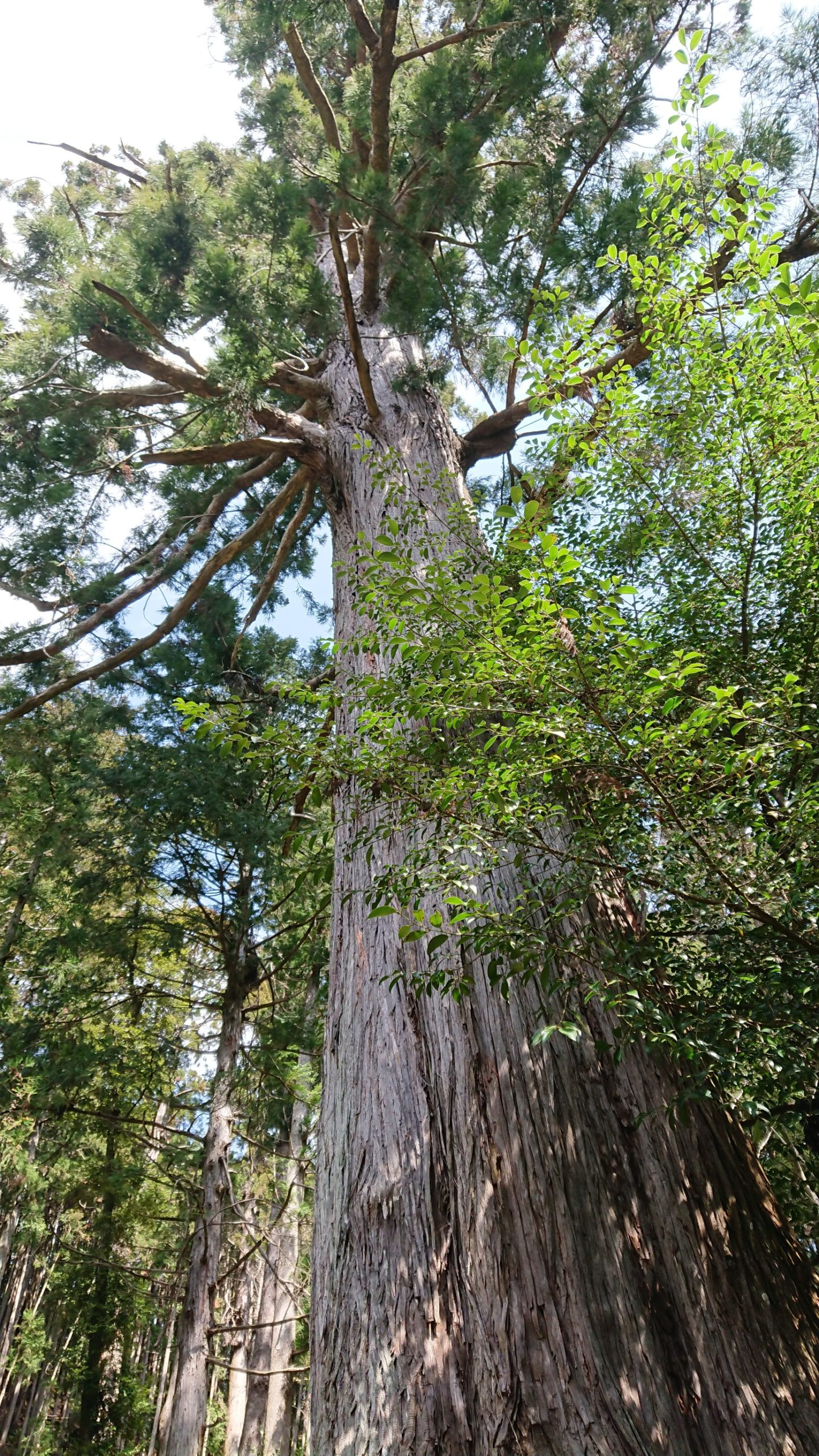
The shrine pavilions and kagura hall, surrounded by huge 400-year-old cedar and cypress trees, were amazing, and I found myself standing here for a while this time, whereas not so much the last time.

From the information board of Kami-Adagi Shrine.

According to the “Atagiyama Kumano Gongen Engi,” this shrine was built in 928, and is one of the oldest shrines in the county.

The deity Izanami is enshrined in the main shrine.

In the past, the shrine was called Kami-Atagi Rokusho-Gongen and was a magnificent shrine with a separate temple, Amida Temple.

The shrine was rebuilt in 1571. The cedar and cypress trees planted at that time have grown and become one of the most famous shrines in the prefecture.

The annual festival held in April is designated as an intangible cultural asset of the prefecture, and the old form of the festival has been handed down to the present.
The festival is also famous for the beautiful artificial flowers that decorate the tops of the banners, and is called the Ichimei Hana Matsuri (Flower Festival).

It is surprising that the shrine was founded in 928.
Furthermore, the words “Kumano Gongen” can be seen.
And the deity is Izanami, who is also familiar to Kumano.
I still feel a sense of familiarity.

There is a “Shigeemon cedar” in the precincts of the shrine.
The explanatory plaque reads as follows

Tango Shigeemon was a village headman in the Aitoku area during the Genroku era (1688-1704), and his foresight and leadership earned him the respect of the local residents.
His contributions to the shrine were so great that a cedar tree representing the shrine forest was named to commemorate his achievements.

Incidentally, there is a Shimo-Adagi Shrine a short distance away. It is easily recognizable because it is located along the prefectural road.
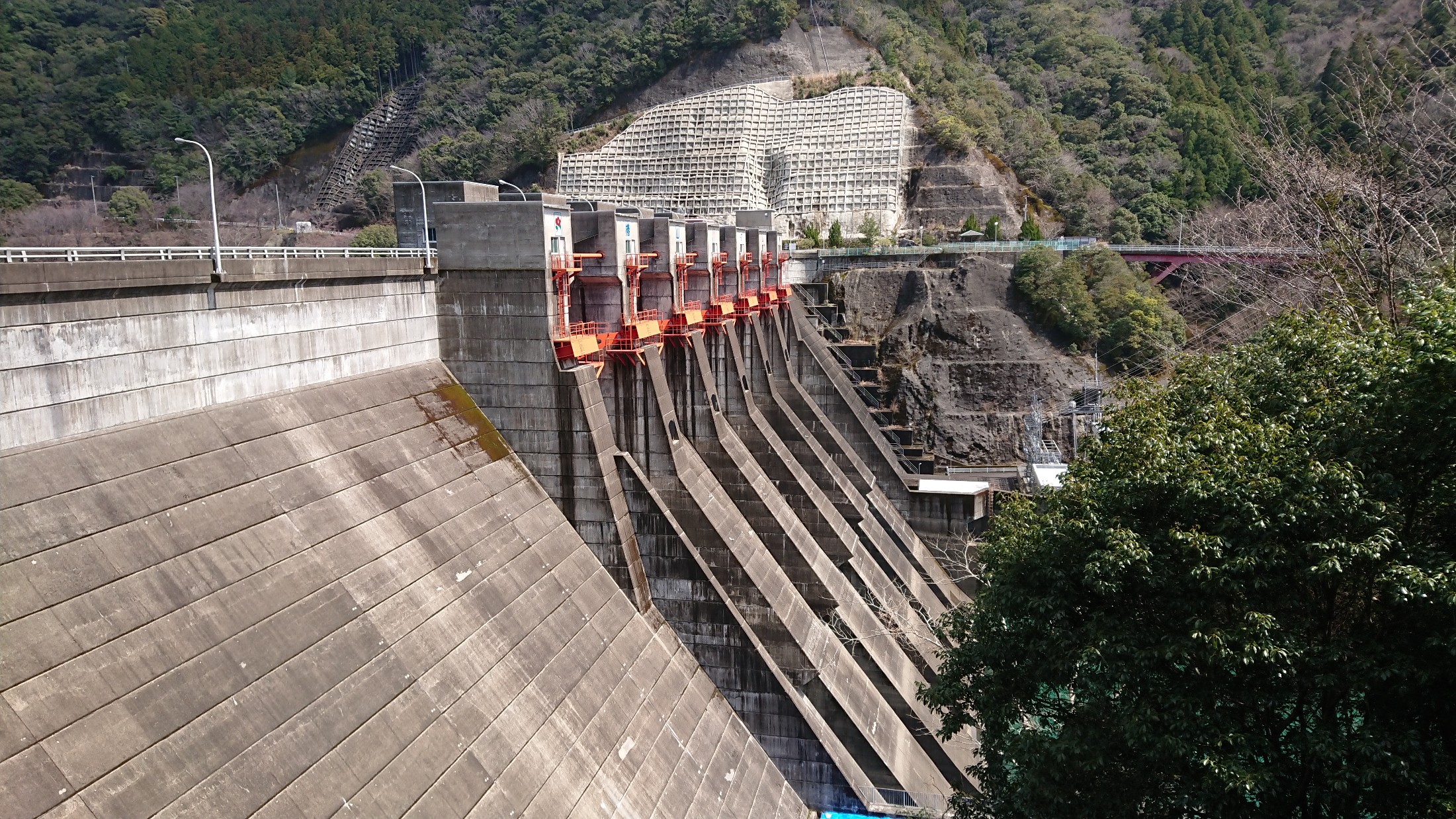
After Kami-Atagi Shrine, I went to see the nearby Tsubayama Dam.
It was a pity that the observatory was closed, but you can feel the power of mankind.
…I just don’t think the dam is necessary, though.

After the dam, “Japan’s best echo point”

This area has two “Japan’s Best!”

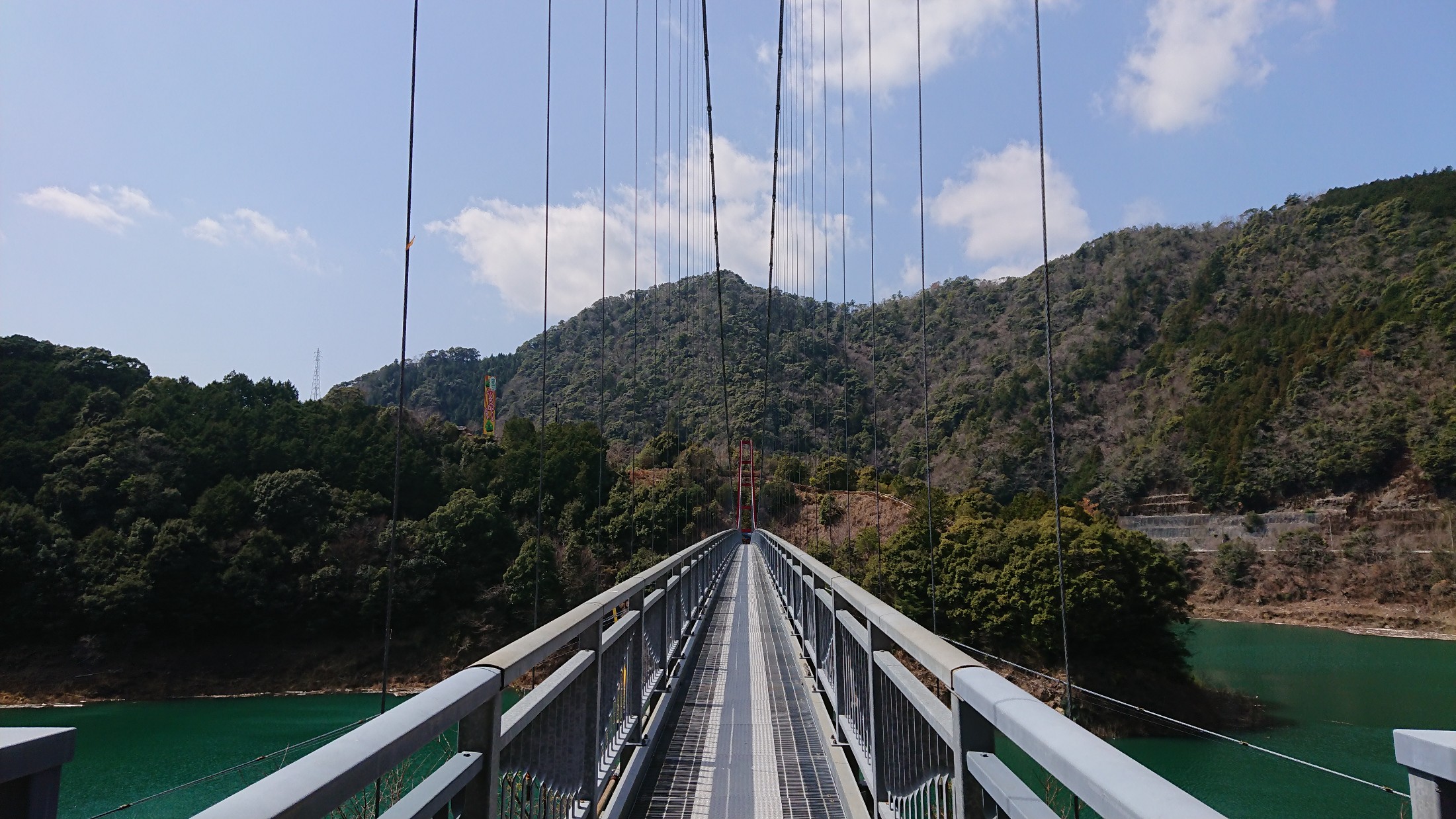
Cross the suspension bridge.

There are three echo points in total.
While I was reading the explanation at the signboard, a lady came to me.

The lady said, “Is this the yoo-hoo point?”
I said, “It seems so. There are two other places.”
A lady said, “Have you done it yet?”
I said, “No, not yet.”

After that conversation, for some reason, I and she were saying “Yoo-hoo” together.

Here, the “yoo-hoo” comes back really beautifully.
According to the explanation, “Yoo-hoo” can be heard when the distance to the mountain across the street is around 300 meters.
If you are closer than that, you have to shout “yoo-hoo” or “yaho” or “ah” to be heard.
I guess the distance to the mountain just across the street here is 300 meters.
I took a video, but the video did not sound clean.
I heard that it is possible to troll and do a tongue twister here.
If you have confidence in your voice, why don’t you give it a try?

On the way back, I returned to Aitokuso and took a bath in the hot spring.
The hot spring was not for me as it was circulated and filtered and smelled of chlorine.
However, I think the quality of the spring is good because it makes your skin smooth.
It was similar to the Ryujin Onsen.

I can’t tell you where this place is because it is someone’s land, but there was a place where shiitake mushrooms are cultivated where I happened to wander.
It was a sight to behold, but I got out immediately.
I didn’t steal the shiitake mushrooms.

日高川町に下見に行ってきました

Click here for the English version
I went to Hidakagawa Town for a preliminary inspection.

日高川町の旧美山村に行ってきました。
メインは藤棚ロードの下見でしたが、他も見てきました。

森林公園入り口の「道のほっとステーション みやまの里」で入場券を購入しましたが「今は何もないですよ」と店員さんがお断りしてくれました。
今日は下見なので何もなくてもいいのですが、先に気を遣って言ってくれたことに感謝。
幟の「手作り」という言葉に惹かれて思わず食べる予定のなかったお弁当を購入してしまいました。

私が購入したのはサバの塩焼き弁当だったのですが、大きなサバの切身が2つも入っていて、さらには大根おろしまでついて、大きなだし巻玉子など、おかずもたくさん入って410円(!)まさに「お値段以上」でした。
サバも脂が乗っていて非常に美味しかったです。
だし巻きも美味しかった。

このお弁当、近くの愛徳荘さんが作っているようです。
愛徳荘さんはお昼も食べられるので、次回行ってみようと思います。

さて、肝心の藤棚ロードは、本当に何もありませんでした(笑)

しかし、展望台からの眺めが良く、藤の花が咲けば本当にキレイなところだろうなと思いを馳せながら歩きました。
全長は1,646メートルあり、日本一の長さだそうです。
ちなみに、藤の見頃は4月中旬から5月初旬だそうです。
藤棚ロードとは?

道中にはミステリーハウスもありました。

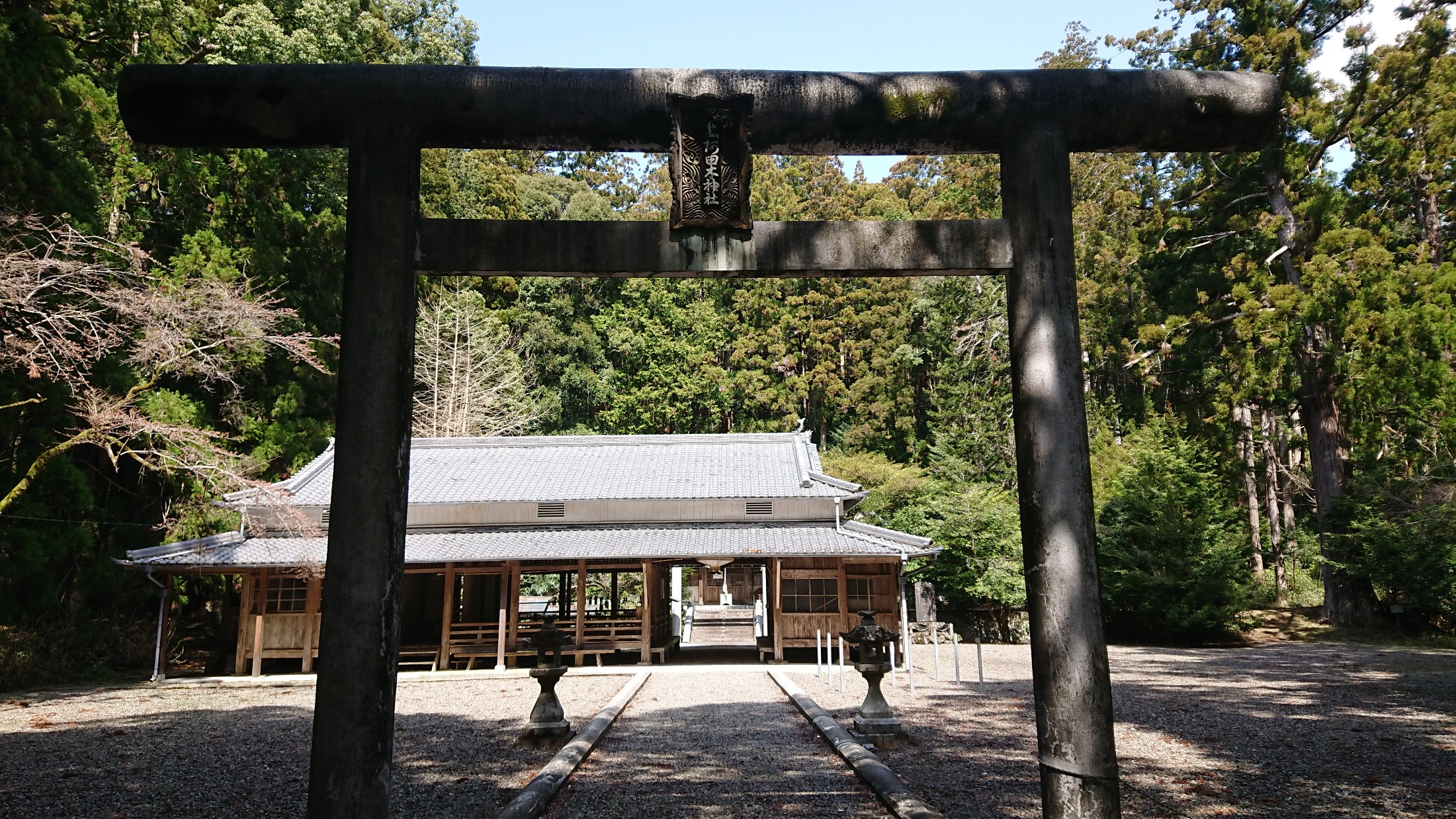
藤棚ロードを歩き終わり、その足で近くの上阿田木神社(かみあたぎじんじゃ)に行ってきました。
以前も参拝したことがありましたが、今回はここが一番のツボでした。
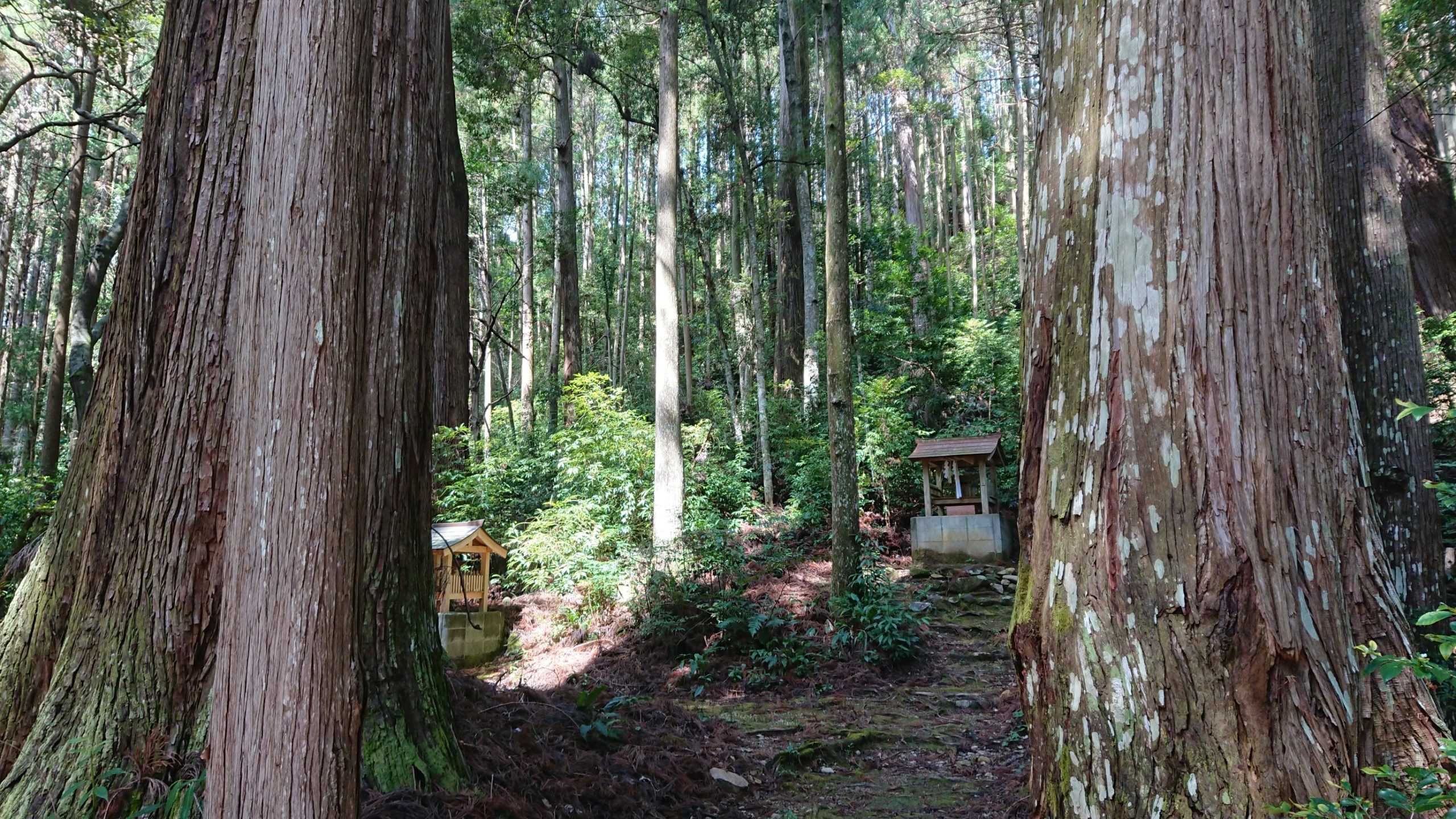
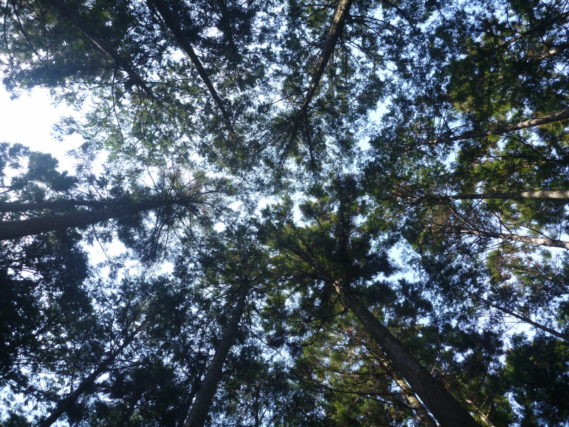
樹齢400年の杉やヒノキの巨木に囲まれた社殿や神楽殿が素晴らしく、前回はそうでもなかったのに、今回はしばらくここに佇んでしまっていました。

上阿田木神社の案内板より。

当社は「愛徳山熊野権現縁起(あたぎやまくまのごんげんえんぎ)」によりますと、延長6年(928)年の創建と伝えられ、郡内指折りの古い神社であります。

祭神は伊耶奈美神を本殿にお祀りしています。

昔は上阿田木六所権現と称え、別当寺阿弥陀寺を持つ壮麗な神社でしたが、永禄5年(1562)年の兵火に焼け元亀2年(1571年)に再建しました。
その時植林した杉桧が成長し、県内でも有名な社叢となりました。

4月の例祭は県の無形文化財に指定され、古い祭りの形式が今に伝えられています。
雅やかな神歌と笛太鼓に合わせてヤツハチ、稚子(獅子)の舞が神前に奉納され、幟の先端を飾る美しい造花が有名で一名花祭りと言われています。

創建が928年とは、驚きですね。
さらには「熊野権現」の文字が見えます。
そして、御祭神は熊野でも馴染み深いイザナミ様です。
やはり親近感が湧きます。

境内には「重右衛門杉」があります。
説明板には、こう書かれています。

丹後重右衛門は元禄年間の頃、愛徳山下で庄屋をつとめ、その先見性と指導力は地区住民尊敬の的となっていた。
神社への貢献度は高く、その功績を記念するため神社林を代表する杉の木に名が冠せられました。

ちなみに、少し離れたところに下阿田木神社があります。ここは県道沿いなのですぐにわかります。
上阿田木神社の後は近くの椿山ダムを見に行きました。
展望台が閉鎖されていたのが残念でしたが、人間の力の凄さを感じることができます。
・・・ただ、ダムは必要ないとは思いますがね。

ダムの後は「日本一のヤッホーポイント」

この地域、「日本一」が2つもあります!

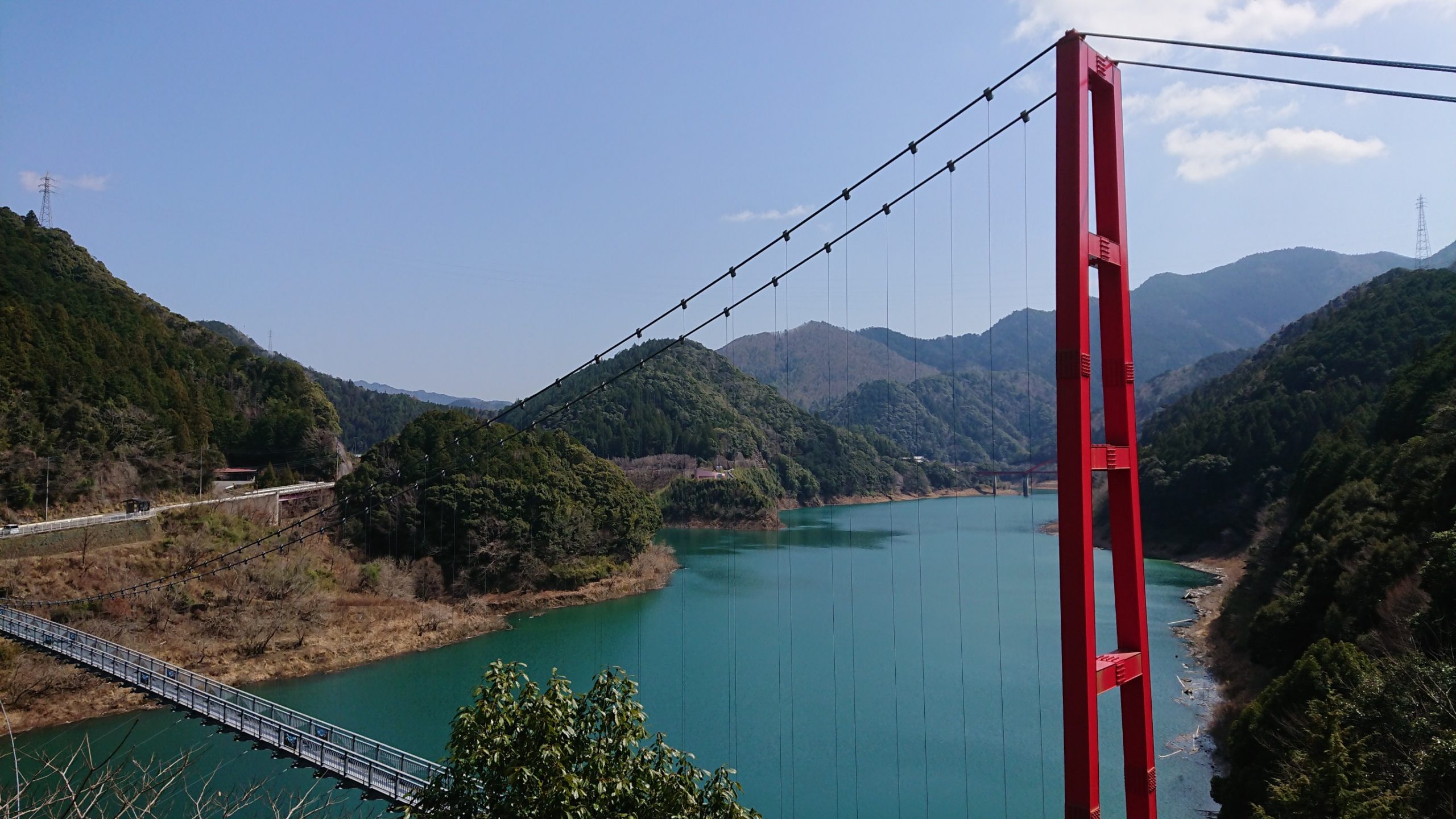
吊橋を渡って行きます。

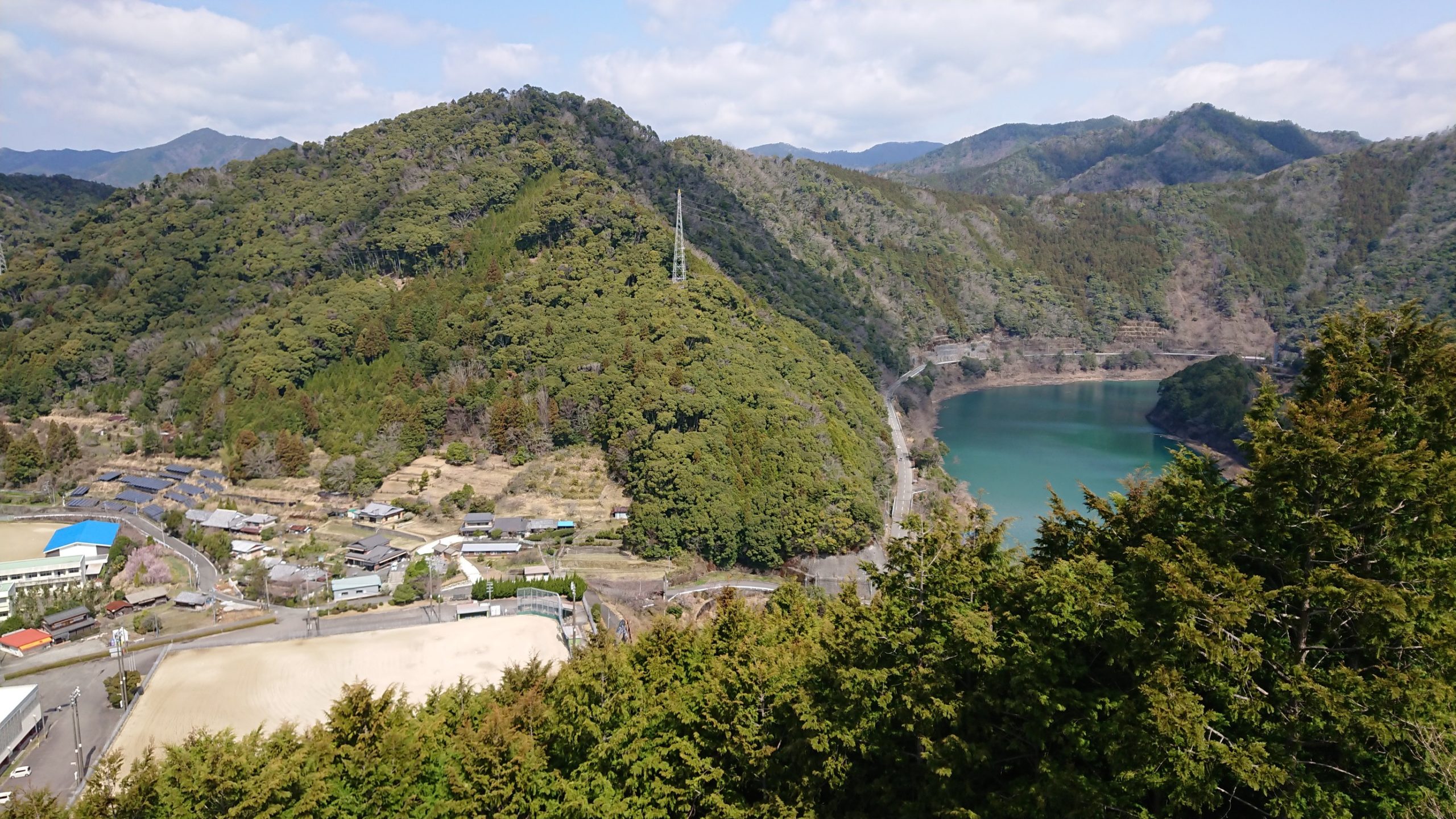
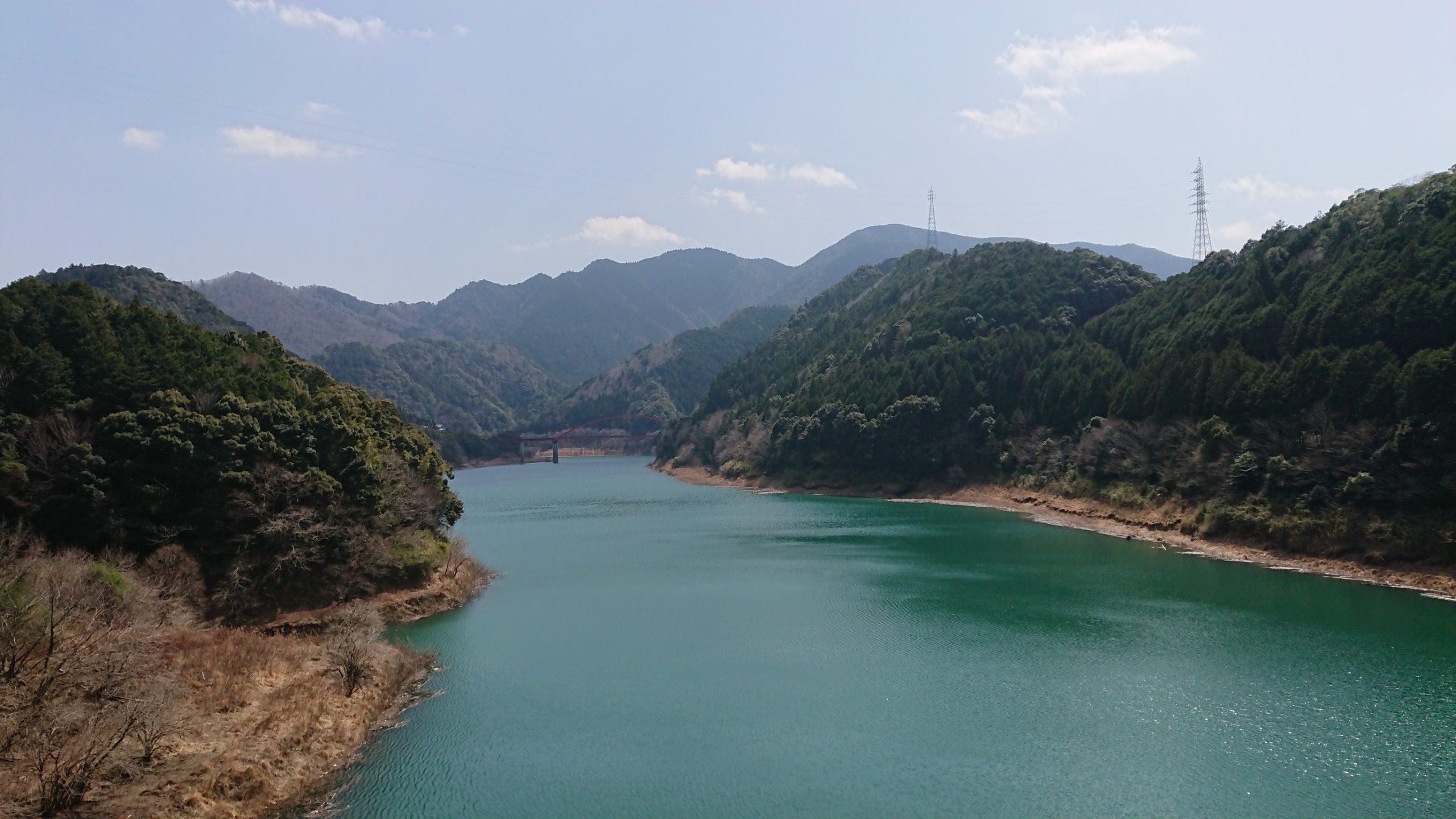
その途中のダム湖の風景。

ヤッホーポイントは全部で3ヶ所あります。
説明看板のあるところで説明を読んでいると、おばさんがやって来ました。

おばさん「ここがヤッホーポイント?」
わたし「そうみたいですね。他にもう2ヶ所あるみたいですけど」
おばさん「もうしましたか?」
わたし「いや、まだなんです」

という会話のあと、なぜかおばさんと「ヤッホー」の共演(笑)

ここ、本当にキレイに「ヤッホー」が返ってきます。
説明によると、向かいの山までの距離が300メートル前後が「ヤッホー」のやまびこが聞こえるらしいです。
それより遠くなると聞こえにくくなり、近くだと短く「ヤッホ」とか「ヤホ」とか「あ」とか叫ばないと聞こえないそうです。
ここはちょうど向かいの山までの距離が300メートルなんでしょうね。
動画を撮ったのですが、動画ではキレイに聞こえませんでした。
ここではなんと、輪唱や早口言葉も可能だとか。
声に自信のある方はやってみてはいかがでしょうか?(笑)

帰りに愛徳荘まで戻り、温泉に入りました。
温泉は循環ろ過で塩素の匂いがしたので、私には向いていませんでした。
しかし、お肌がつるつるになりますので泉質はいいと思います。
龍神温泉に似た感じでした。

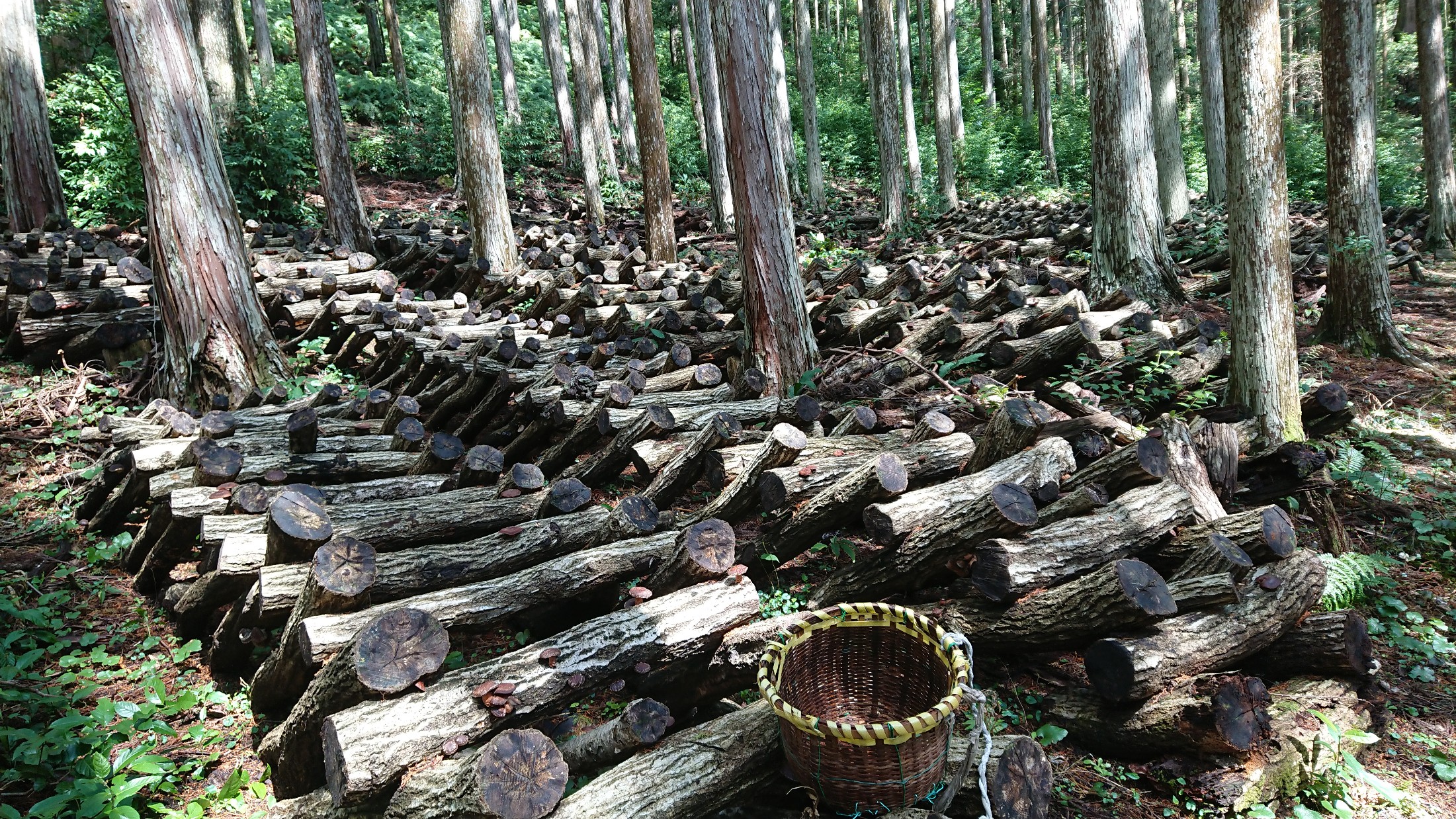
人の土地なので、ここがどこかは言えませんが、たまたま迷い込んだところに椎茸を栽培しているところがありました。
圧巻でしたがすぐに脱出。
椎茸、盗んでませんよ(笑)

藤原定家の熊野御幸

今回は、オススメ書籍のご紹介です。
神坂次郎氏の著書「藤原定家の熊野御幸」です。

すでに文庫本では中古しか出回っていませんでしたが、最近Kindleで発売されていました。
価格も550円なので、買って損はありません。

私自身、ガイドの勉強をする際にさまざまな本を読みましたが、中でも一番わかりやすくて面白く、また、熊野についてコンパクトに纏められた一冊です。

たまに「?」ちょっと違うかな?という所はありますが、それを差し引いてもかなり忠実に熊野の歴史や熊野御幸について書かれており、これ一冊で結構な範囲をカバーできます。

熊野詣はをはじめとして、花山法皇、補陀落渡海、阿弥陀寺、民話など、熊野にまつわる様々な話題が展開されています。

特に熊野詣については、出立の儀から紀伊路、中辺路に至る解説を、定家の「熊野御幸記」になぞらえて書かれており、非常に面白いです。

目次

第一章 聖地 熊野三山
第二章 熊野三千六百峰への道
第三章 南無 日本第一霊験熊野大権現
第四章 花山院の熊野行
第五章 補陀落渡海
第六章 那智妙法山 阿弥陀寺
第七章 大雲取越
第八章 天竺 摩竭陀国
現世極楽の一冊 木村尚三郎
上田正昭が読む「熊野御幸」
司馬さんと熊野
熊野関連地図

ただ、定家が熊野に詣でる時に使う言葉は「御幸」ではありませんが(笑)
それはさておき、熊野の勉強に必ずお役に立ちますよ。