Today, we begin with another story by Zenko Onagi.
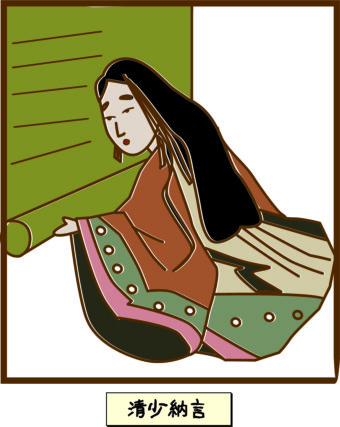
The Heian culture was a time when female poets such as Murasaki Shikibu, Izumi Shikibu, and Sei Shonagon were active. This was a time when Japan enjoyed peace and stability, and women were able to shine.
Such an era and society in which women could shine could only be realized if the world was at peace. There were women who played an active role even in a war-torn world, but they were rather manly people. Instead, women can only shine in terms of culture and education if the society is stable.
The Pillow Book is one of Sei Shonagon’s most famous works. Many of you may remember having to recite “Spring is at dawn and the mountains are turning white…” The Pillow Book was written in the middle of the Heian period (794-1185), and was written by the author Sei Shonagon, who was a famous author in the Heian period. Many of you may have been taught that The Pillow Book is a very prestigious work of literature written by Sei Shonagon in the middle of the Heian period (794-1185). However, the Pillow Book is a book that you keep by your bedside before going to sleep and read it and laugh at it.
“Summer is the Night” is also said to have depicted a scene in which a group of people were playing outside when an evening shower came and they looked at each other and laughed when they all went under the eaves of the roof.
Or, when a man dressed up for a night crawl wearing a long crow’s-bonnet (60 to 70 cm long) sneaked into a house and made a big fuss by hitting his crow’s-bonnet on the duck-roof, causing a big commotion. He made such a loud noise that even the woman and her family, who were waiting for him with great excitement, knew about it, and they wondered what he was thinking. The story is said to read, “What in the world is this person thinking?”
So Kiyomaro discussed the matter with his sister Hiromushi, and they agreed that he should not lie, and so he honestly told the story in the presence of the emperor, Dokyo, and other officials.
Thus, Dokyo was forced out of his position.
Kiyomaro rose through the ranks to become involved in the construction of Heian-kyo.
According to Zenko Onagi, a person like Wake-no Kiyomaro always appears at each historical milestone. And the national character of Japan is preserved. These people like Wake-no Kiyomaro often suffer terrible things. However, thanks to the activities of such people, the character of Japan has been preserved to this day, and it is the only country in the world where the people are regarded as the great treasure and where the people can live in peace and prosperity.
It is said that Japan is now on the verge of collapse, but perhaps it is precisely because Japan is now on the verge of collapse that we need a modern-day Wake-no Kiyomaro.
In the 13th and 14th century West, war orphans were taken in by hospitals, churches, or slave traders. One 13th-century country record states, “Pagans, prostitutes, and orphans are not allowed in the city or its environs,” and there were even laws imposing fines for harboring orphans.
In other words, these people were to be excluded from society. This is why the West did not have a system like Japan’s even in the 13th century.
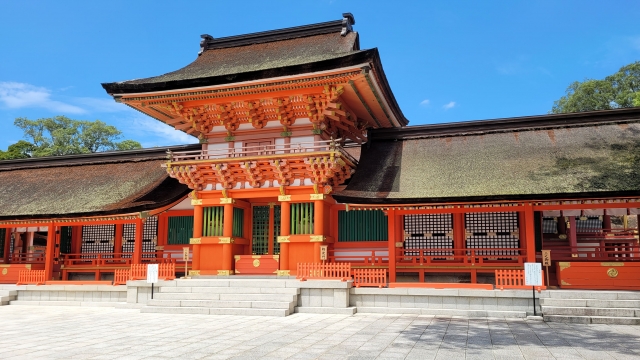
Now, Dokyo, who had been plotting to usurp the position of emperor, received an oracle from the god of Usa Hachiman Shrine in Oita and began saying, “I will be the next emperor”. For more information on this story, please click here. The Heian Capital and the Japanese Political System (1)
To confirm whether what Dokyo said was true or not, Emperor Shoutoku instructed Wake Hiromushi, Wake Kiyomaro’s sister, but unfortunately, Wake Hiromushi was ill at the time and not in a fit state to make the long journey. He asked his younger brother Kiyomaro to go in his place.
Kiyomaro was 37 years old at the time.
Hearing this story, Dokyo immediately went to Kiyomaro and offered to give him the rank of minister. This was also a threat: “If you defy me, you and your sister will die”.
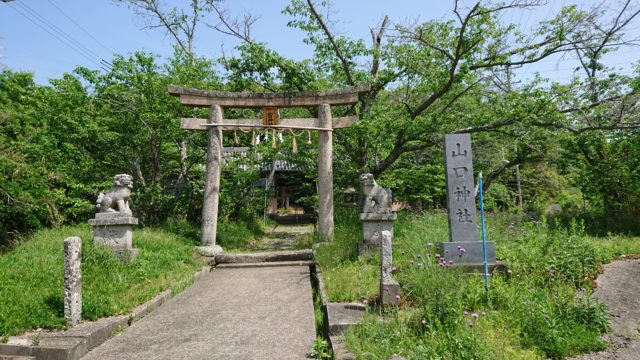
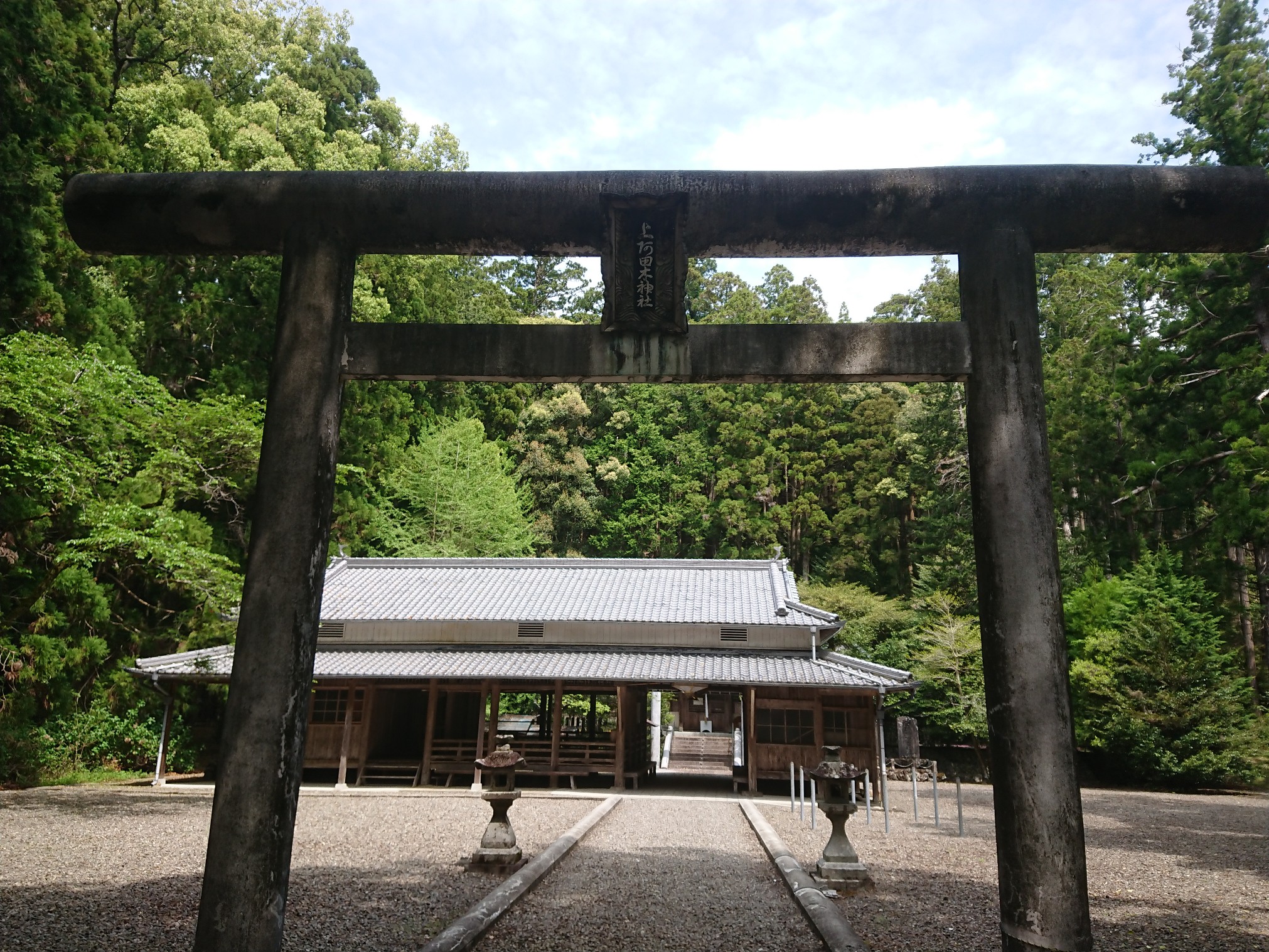
Today, We had fun in Hidakagawa Town with members of the Wakayama Local Guide Association. First, we visited Kamiatagi Shrine. Kamiatagi Shrine was originally built in 922 in Sogawa Village after receiving an oracle from the deities of Kumano, and was moved to its current location in 928. The main deity is Izanami no Mikoto who is the mother deity of Japan’s many deities.
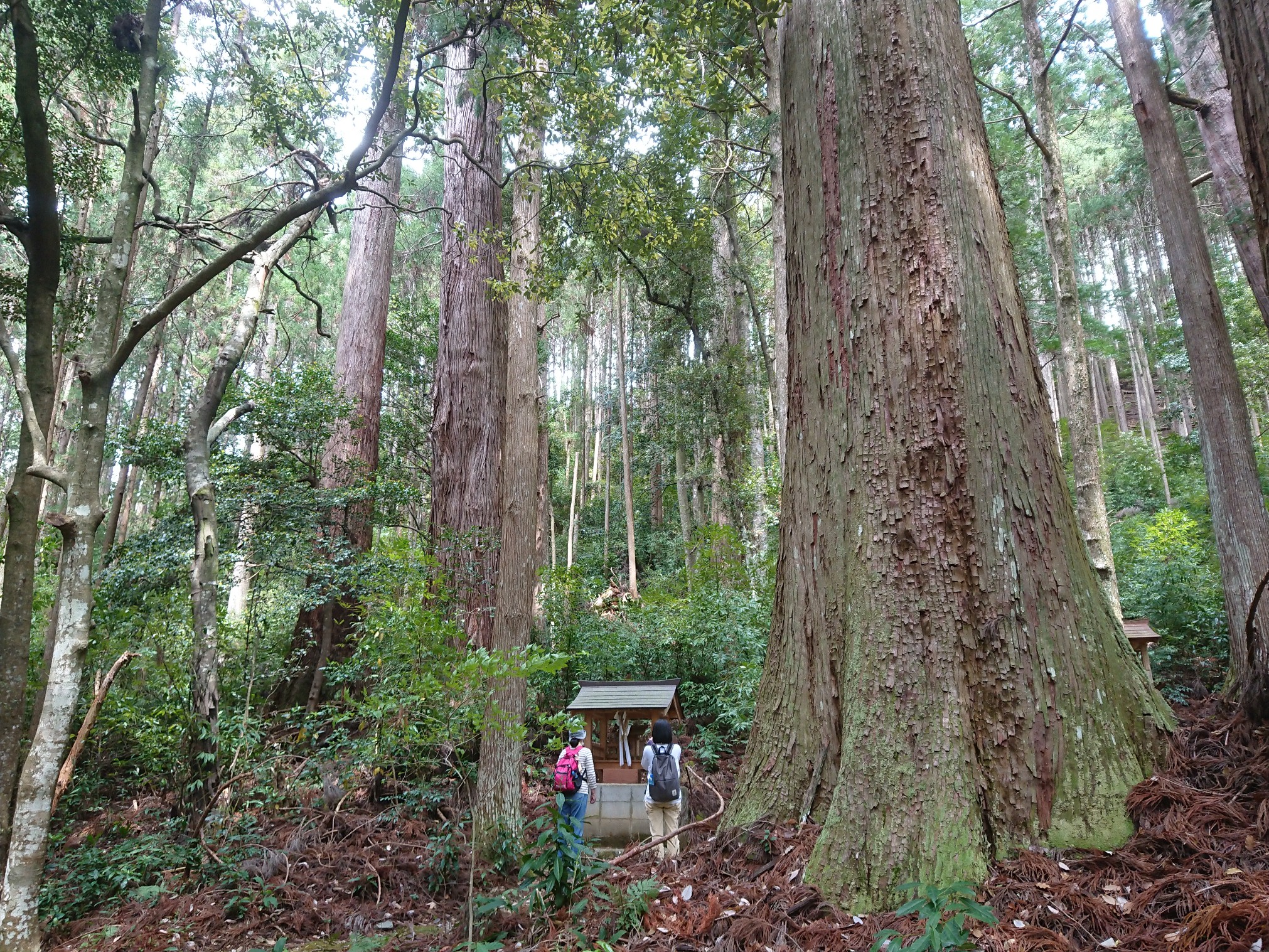
The temple grounds are planted with 450-year-old cedar and cypress trees, creating a solemn atmosphere.
There is also a stage on which the Yatsuhachi and children’s dances are dedicated during the festival held on April 29.
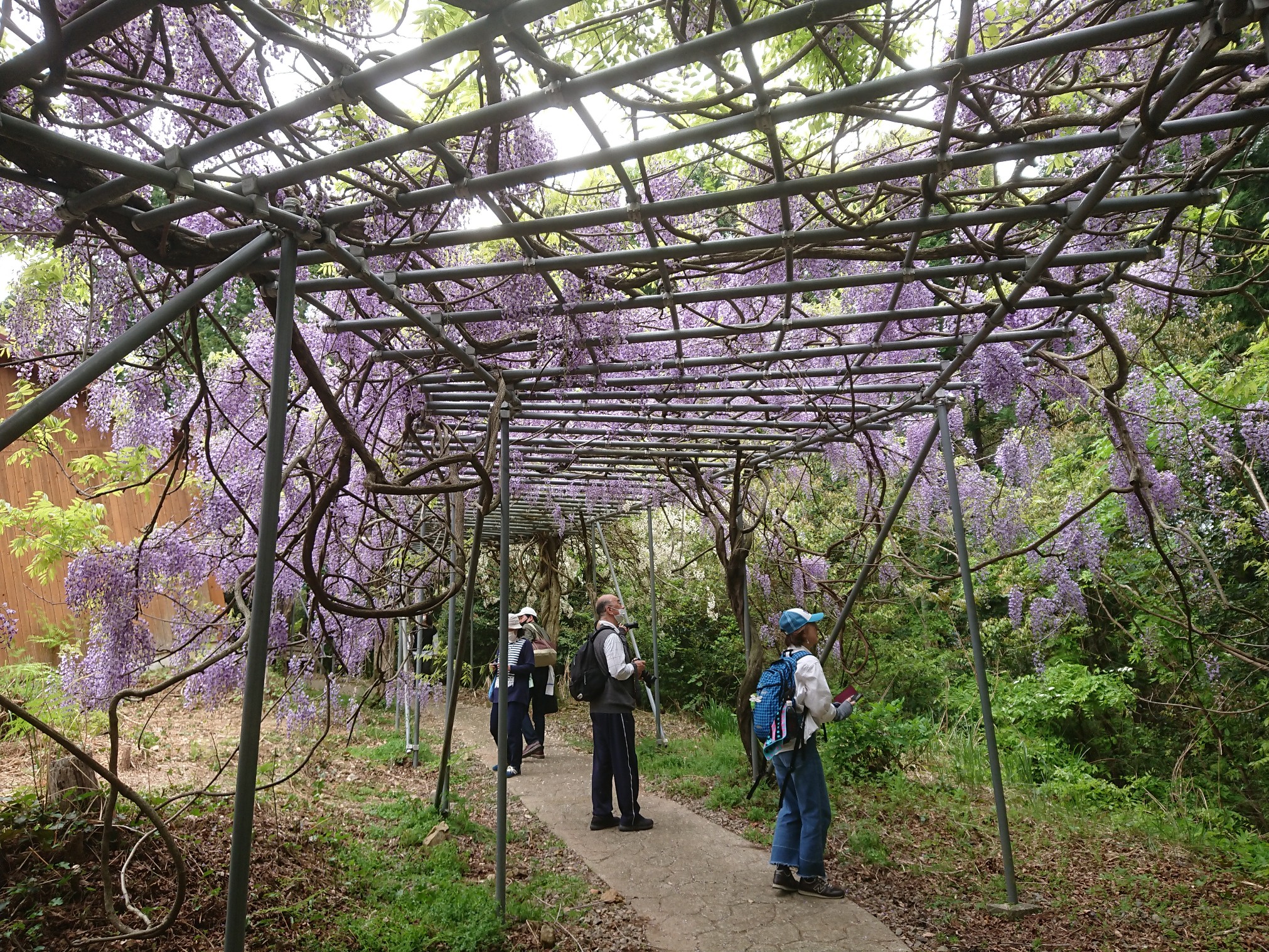
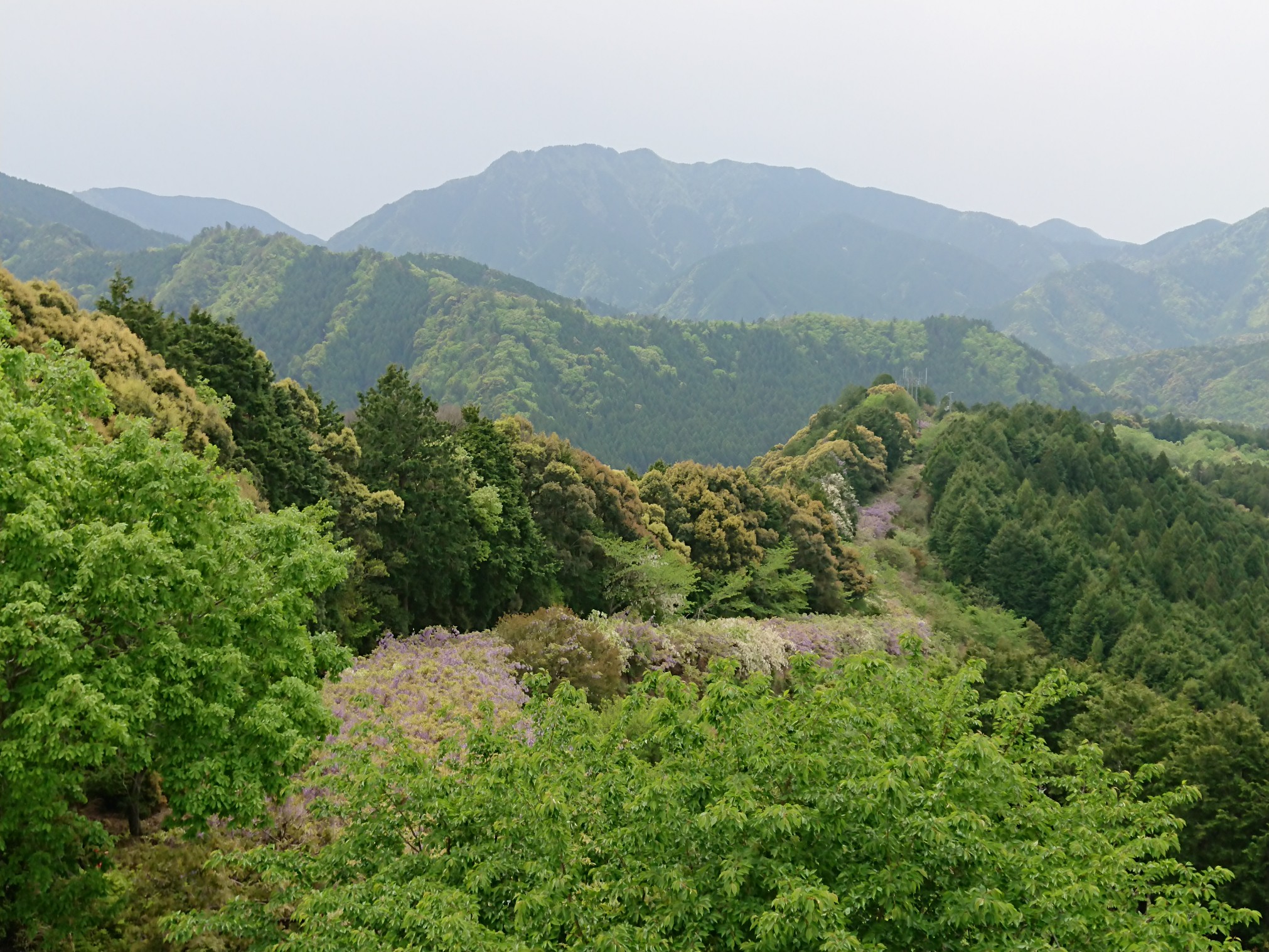
The wisteria road is located in Miyama-no-sato Forest Park, where wisteria trees are planted over a total length of 1,646 m. Visitors can enjoy wisteria flowers as they walk through the wisteria tunnel.
Some of the wisteria were still in bud, but some were in full bloom, depending on the type, and we were able to fully enjoy the beauty and fragrance of the wisteria flowers.
At the Yoo-hoo point, children were shouting. It was cute. This place is only claimed to be “the best in Japan,” and it returns really beautiful yamabiko (echo).
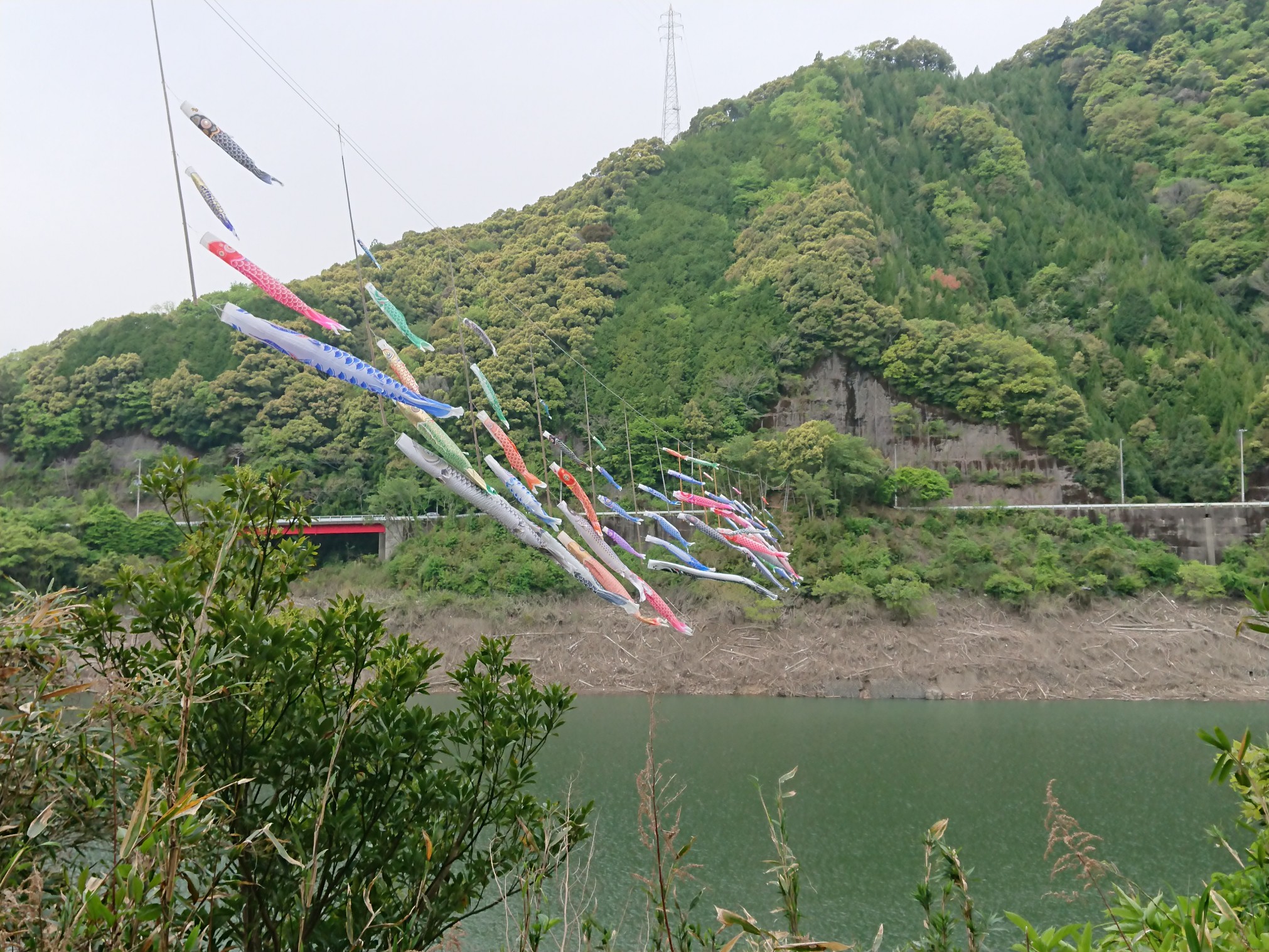
Carp streamers were hung over the dam lake, and we photographed them from the opposite shore. We walked along a road we had never been on before just to photograph the carp streamers. I love this kind of unscheduled fun.
Although it is seasonal, I would love for foreign visitors to come to this place.
Recently, the policy of “civilian control” has been adopted, in which civilian officials control politics, because it is not a good idea for military officers to be in power.
It is mainly the leftists and those in postwar education who now claim that politics by civilian officials is important, but why don’t they mention Wake-no Kiyomaro, the hero of the civilian government?
A quick check of Amazon.com reveals that the only book written about Wake-no Kiyomaro since 2000 A.D. is one by Isao Hisai.
There are no other books on Kiyomaro Wake at all.
If one is going to argue for civilian control, it would be a good idea to do more research on Wake no Kiyomaro.
Wake-no Kiyomaro was born in 733 AD. Wake-no-Kiyomaro had an older sister, Wake-no-Hiromushi, who was three years older than him. This elder sister was also a very talented person, and went up from Okayama to the capital of Nara, where she became a courtesan, Uneme. Later, at the age of 15 (today’s 14), she married Kutsuragi no Henushi. He was a very kind man, and at that time, he took care of children who had lost their parents due to war or famine, and gave them the family name of Katsuragi when they came of age.
This is called the “foster parent system” in modern terminology.
This foster parent system was started in 740. In fact, this was the first foster parent system in the world.